
 NEWS List
Why Fiber Optic Cable Pushing Must Use FRP Rodder? The Hidden Red Lines in Fiber Installation
Introduction
Fiber optic networks have become the backbone of modern communications. From FTTH (Fiber-to-the-Home) deployments and 5G backhaul systems to hyperscale data centers and smart city infrastructure, fiber cables are now installed in virtually every major construction project.
However, unlike traditional copper cables, fiber optic cables are highly sensitive to mechanical stress. A mistake during cable installation may not cause immediate failure but can significantly shorten network lifespan, increase signal attenuation, and create expensive maintenance problems years later.
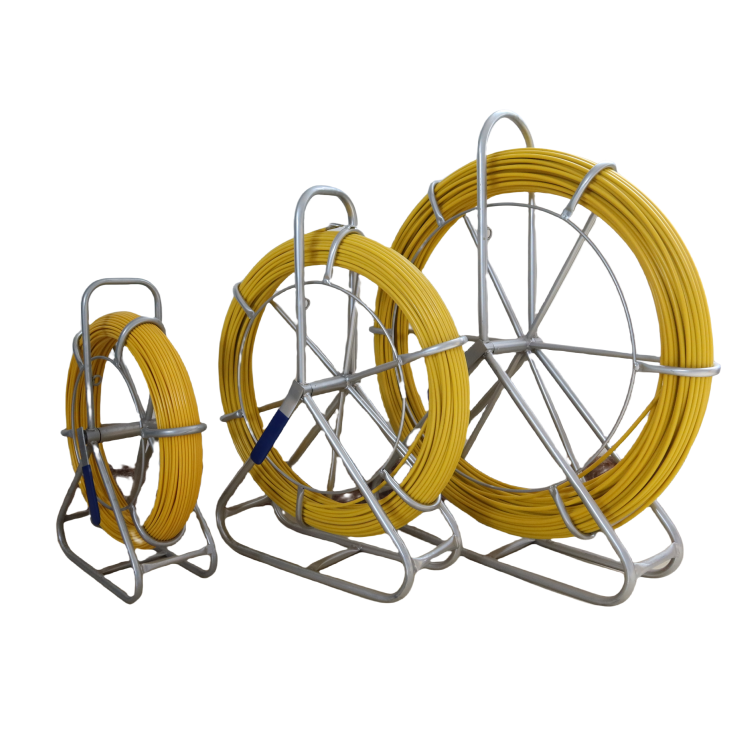
This is why professional fiber installation contractors increasingly insist on using FRP (Fiberglass Reinforced Plastic) rodders instead of traditional metal cable snakes or steel rodders.
Many project managers focus on cable specifications while overlooking the installation tools themselves. In reality, the wrong duct rodder can become the hidden source of fiber damage.
This article explores the critical reasons why FRP rodders have become the industry-preferred solution for fiber optic cable installation.
Fiber Is Stronger Than It Looks—But More Fragile Than Most People Realize
One common misconception is that modern fiber optic cables are extremely durable.
While fiber cables contain strength members such as aramid yarns and reinforced jackets, the optical fibers inside remain vulnerable to excessive mechanical stress.
Two parameters determine fiber survival during installation:
Pull tension
Bend radius
Exceed either limit, and permanent performance degradation may occur.
The Deadly Limits of Pull Tension and Bend Radius
Pull Tension: The Invisible Network Killer
Every fiber cable has a maximum rated pulling tension.
When installers exceed this limit:
Optical attenuation increases
Fiber microbending occurs
Fiber strands may fracture
Long-term reliability decreases
The danger is that damage is often invisible.
A cable may pass acceptance testing immediately after installation but experience accelerated failure years later.
Common Causes of Excessive Pull Tension
Long conduit routes
Multiple bends
High friction inside ducts
Sudden pulling forces
Improper installation tools
The installation tool directly influences how much stress is transferred to the cable.
Bend Radius: The Rule That Cannot Be Ignored
Fiber optic cables are designed with minimum bend radius requirements.
Excessive bending causes:
Signal loss
Micro-cracks
Fiber fatigue
Transmission instability
In practical installations, the most common causes of bend-radius violations include:
Tight conduit turns
Improper cable handling
Aggressive pulling techniques
Rigid installation tools
A rodder that lacks flexibility can force the cable into sharp directional changes, creating hidden network defects.
How Metal Rodders Silently Damage Fiber Coatings
Many installers assume steel rodders are harmless because they never directly contact the optical fibers.
This assumption is misleading.
Fiber damage often begins with damage to the cable jacket and protective layers.
Surface Abrasion During Installation
Steel rodders generally have:
Higher surface hardness
Less flexibility
Greater localized contact pressure
When navigating bends and conduit irregularities, metal rods may create:
Scraping forces
Impact points
Abrasion against cable jackets
Over time, these stresses can compromise protective layers designed to shield the fiber core.
Connector-Induced Damage
Metal rodders frequently use rigid steel connectors.
During pulling operations, these fittings can:
Strike conduit walls
Catch on duct joints
Generate shock loads
The resulting force spikes are transferred directly to the cable.
Even when visible damage does not occur, repeated stress events can affect long-term cable performance.
The Hidden Problem of Excessive Rigidity
Steel rodders are designed for pushing strength.
However, excessive rigidity becomes a disadvantage in fiber installations.
Instead of smoothly following conduit contours, a rigid rod may:
Force its own path
Increase sidewall pressure
Create localized stress points
These conditions raise the likelihood of jacket deformation and microbending within the fiber cable.
How FRP Push Rods Protect Fiber Jackets Through Low-Friction Operation
FRP rodders were developed specifically to address many of the mechanical challenges associated with cable installation.
Smooth Protective Outer Coating
Most professional FRP rodders feature:
Polyethylene coating
Wear-resistant surfaces
Low-friction finishing
These characteristics reduce drag throughout the conduit system.
Lower friction means:
Lower pulling force
Lower cable stress
Lower installation risk
Better Flexibility Through Bends
Unlike steel, fiberglass combines:
High tensile strength
Controlled flexibility
Excellent bend recovery
As the rod travels through elbows and directional changes, it naturally follows conduit geometry.
This helps maintain safe cable routing without creating sharp stress points.
Reduced Sidewall Pressure
One of the most important advantages of FRP is reduced sidewall loading.
Because fiberglass rods flex more naturally:
Contact pressure becomes more evenly distributed.
Friction hotspots are minimized.
Cable jackets experience less mechanical stress.
The result is a safer installation environment for sensitive fiber optic cables.
Real-World Lessons from Long-Distance Fiber Duct Installations
Modern fiber deployment projects frequently involve:
500-meter duct sections
Urban conduit networks
Highway communication corridors
Underground utility tunnels
In these environments, installation efficiency and cable protection become equally important.
Long-Distance Pulling Challenges
As installation distance increases:
Friction accumulates
Pull tension rises
Risk of cable damage increases
Contractors working on metropolitan broadband projects increasingly specify fiberglass rodders because they reduce installation resistance while maintaining adequate pushing capability.
Telecommunications Industry Practice
Across large-scale fiber projects, FRP rodders have become the standard tool for:
Pull rope installation
Duct proving
Conduit inspection
Fiber cable routing
Their widespread adoption reflects years of field experience showing lower cable damage rates and more predictable installation performance.
Industry Standards and Material Requirements
Fiber installation standards worldwide emphasize minimizing mechanical stress during installation.
While standards often focus on cable tension limits, bend radius requirements, and conduit preparation, the principles behind these requirements strongly support the use of non-metallic installation tools.
Key Industry Requirements
Professional fiber installation practices generally require:
Controlled Pulling Force
Installers must avoid excessive tension that could damage optical fibers.
Bend Radius Compliance
Cable routing must maintain manufacturer-specified minimum bend radii.
Jacket Protection
Cable jackets should remain free from cuts, abrasions, and deformation.
Smooth Installation Pathways
Conduits should be prepared to minimize friction and mechanical resistance.
FRP rodders align naturally with these objectives due to their flexibility, smooth surfaces, and non-metallic construction.
Why Telecom Contractors Specify FRP by Default
Today, many experienced fiber contractors no longer ask whether FRP should be used.
Instead, they ask:
"Is there any reason not to use FRP?"
The answer is increasingly rare.
FRP rodders offer:
✓ Electrical insulation
✓ Low friction operation
✓ Excellent flexibility
✓ Reduced cable stress
✓ Corrosion resistance
✓ Compatibility with sensitive telecommunications environments
These advantages directly support successful fiber installations.
Conclusion
Fiber optic networks represent significant long-term investments. Yet many installation failures originate not from the cable itself but from improper handling during deployment.
The hidden red lines of fiber installation are clear:
Never exceed pull tension limits.
Never violate bend radius requirements.
Never allow unnecessary jacket damage.
Never introduce avoidable mechanical stress.
FRP fiberglass rodders help installers stay within these limits by providing a lightweight, flexible, low-friction, and non-metallic solution specifically suited to modern fiber deployment.
While steel rodders continue to serve certain industrial applications, the telecommunications industry has largely shifted toward FRP because protecting the cable during installation is ultimately more important than maximizing pushing force.
In fiber optic installation, prevention is always cheaper than repair—and the right rodder is often the first line of defense.
Article Sources / References
本文内容参考公共光纤通信、综合布线及电信工程行业公开技术资料整理,主要来源包括:
1.The Fiber Optic Association (FOA) — 光纤安装规范、拉力控制与弯曲半径要求。
2.BICSI International — 通信基础设施设计与光纤布线标准。
3.Telecommunications Industry Association (TIA) — 光纤通信系统相关技术规范。
4.International Electrotechnical Commission (IEC) — 光缆机械性能与安装测试标准。
5.Fiber Broadband Association (FBA) — FTTH与宽带光纤建设佳实践。
6.Corning Optical Communications — 光纤产品安装指南与工程案例。
7.Prysmian Group — 光缆安装手册与施工建议。