
 NEWS List
How to Choose the Right Fiberglass Duct Rodder Cable Puller? 5 Key Parameters That Make or Break the Job
Introduction
Whether you're installing fiber optic cables, electrical conductors, communication lines, or utility wiring, a fiberglass duct rodder cable puller is one of the most important tools for routing cables through conduits, ducts, and underground pathways.
However, many buyers make purchasing decisions based solely on price or rod length, only to discover later that the equipment lacks the strength, flexibility, or durability required for the job.
This guide breaks down the five critical parameters that determine duct rodder performance and helps contractors, utility companies, telecom installers, and maintenance teams choose the right model for their projects.
Why Choosing the Right Duct Rodder Matters
A properly selected duct rodder can:
Reduce cable installation time
Lower labor costs
Prevent conduit damage
Improve worker safety
Increase cable pulling efficiency
Minimize equipment replacement expenses
On the other hand, an undersized or poorly designed rodder can lead to rod breakage, difficult conduit navigation, and costly project delays.
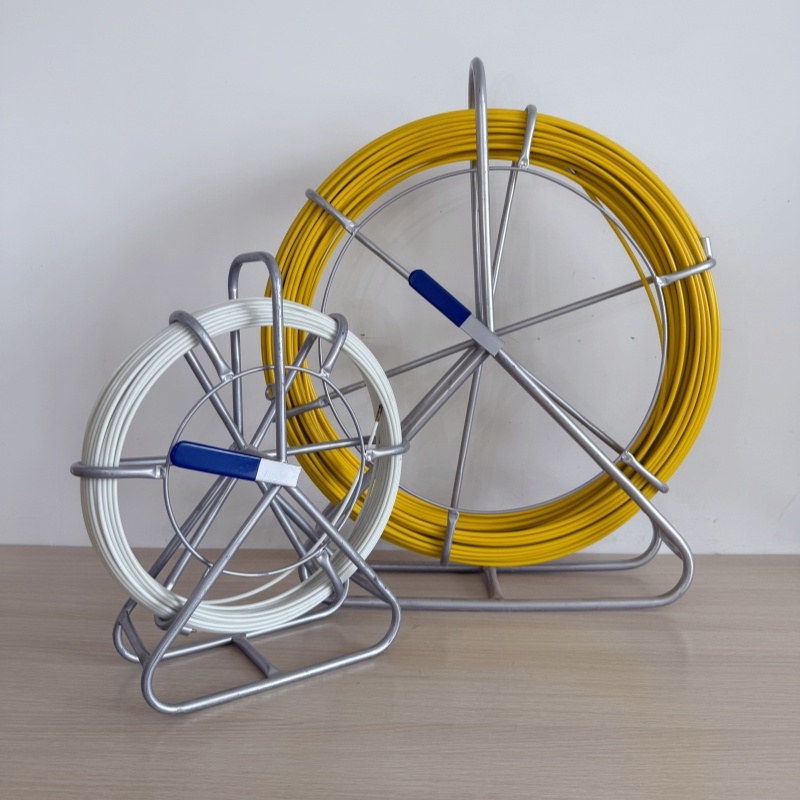
1. Rod Diameter: The Foundation of Performance
Diameter is one of the most critical specifications when selecting a fiberglass duct rodder.
The rod diameter directly affects:
Push force capability
Flexibility
Bend radius performance
Pulling strength
Common Diameter Options
Diameter Typical Applications
4 mm Small communication ducts
5 mm Residential conduit work
6 mm Fiber optic installation
8 mm Medium electrical conduit
9–11 mm Utility cable installation
12–16 mm Heavy-duty underground projects
Selection Guidelines
Choose smaller diameters when:
Conduits contain multiple bends
Duct size is limited
Fiber optic cable installation is required
Choose larger diameters when:
Long-distance pushing is required
Conduits are straight
Heavy pulling loads are expected
For most telecom and utility applications, 8–11 mm fiberglass rods provide the best balance between flexibility and pushing power.
2. Rod Length: Longer Is Not Always Better
Many buyers assume that the longest rodder is automatically the best choice.
In reality, excessive length can create:
Higher purchase costs
Increased reel weight
More difficult transportation
Reduced handling efficiency
Typical Length Options
Length Application
30 m Residential installations
50 m Commercial buildings
100 m Municipal utility work
150 m Telecom infrastructure
200 m+ Long-distance underground duct systems
How to Select the Right Length
Measure:
Total conduit length
Entry and exit points
Expected route deviations
A good rule is to select a rodder length that exceeds the duct route by approximately 10–20%.
This provides sufficient working margin without adding unnecessary weight.
3. Tensile Strength: The Hidden Specification Buyers Ignore
Tensile strength determines how much pulling force the rod can withstand before failure.
This becomes critical when:
Pulling pull ropes
Installing multiple cables
Navigating long conduit systems
Recovering stuck cables
Factors Affecting Tensile Strength
The pulling capacity depends on:
Fiberglass core quality
Resin composition
Rod diameter
Manufacturing process
Typical Pulling Capacities
Rod Diameter Approximate Pulling Force
4–6 mm 150–300 kg
8–10 mm 300–500 kg
11–16 mm 500–1000 kg+
For utility and industrial projects, tensile strength should be considered just as important as rod length.
4. FRP vs. Steel Rodders: Which Material Is Better?
Many contractors debate whether fiberglass (FRP) or steel rodders offer better performance.
The answer depends entirely on the application.
Fiberglass (FRP) Duct Rodders
Advantages
Electrically non-conductive
Corrosion resistant
Lightweight
Excellent flexibility
Safe around energized systems
Best Applications
Fiber optic installation
Electrical conduit work
Telecom projects
Underground utility maintenance
Steel Rodders
Advantages
Extremely high push force
Superior rigidity
Better for straight conduit runs
Disadvantages
Conductive
Heavier
Prone to corrosion
Difficult to maneuver around bends
Best Applications
Industrial facilities
Straight conduit systems
Specialized pulling operations
Which One Should You Choose?
For over 90% of modern cable installation projects, fiberglass duct rodders provide the best combination of safety, flexibility, and durability.
5. Fiber Optic-Specific vs. General-Purpose Rodders
One of the most common questions buyers ask is:
"Do I need a fiber optic duct rodder?"
In many cases, the answer is no.
The core function of a duct rodder remains the same regardless of cable type.
When General-Purpose Rodders Are Sufficient
Standard conduit inspection
Pull rope installation
Residential telecom work
Electrical conduit routing
When Fiber-Optic-Specific Models Are Recommended
Long-distance telecom networks
Microduct installations
Sensitive fiber cable environments
High-precision utility projects
Fiber-optic-specific models often include:
Smaller diameters
Enhanced flexibility
Advanced protective coatings
Specialized guide heads
For routine installations, a high-quality general-purpose fiberglass rodder is usually sufficient.
Industrial-Grade vs. Residential-Grade: Stop Overspending
Many buyers purchase industrial-grade equipment for occasional residential work.
This often results in unnecessary spending.
Residential-Grade Rodders
Suitable for:
Electricians
Home renovation contractors
Small communication projects
Typical specifications:
4–6 mm diameter
30–60 m length
Industrial-Grade Rodders
Suitable for:
Utility contractors
Telecom operators
Municipal infrastructure projects
Typical specifications:
8–16 mm diameter
100–300 m length
Heavy-duty reel systems
Smart Buying Tip
Match the rodder to your most common project—not your largest project.
This strategy typically reduces procurement costs while maintaining productivity.
Pre-Purchase Self-Check Checklist
Before placing an order, answer the following questions:
Project Requirements
☐ What is the conduit diameter?
☐ How many bends exist in the route?
☐ What is the total conduit length?
☐ Will cables be pulled after routing?
☐ Is the environment indoor or underground?
Equipment Requirements
☐ Required rod diameter?
☐ Required rod length?
☐ Minimum tensile strength?
☐ Fiberglass or steel?
☐ Portable or heavy-duty reel?
Budget Considerations
☐ One-time project or recurring use?
☐ Residential or industrial application?
☐ Expected service life?
Completing this checklist helps eliminate unnecessary features and ensures the selected rodder meets operational requirements.
Conclusion
Selecting the right fiberglass duct rodder cable puller is not simply about choosing the longest or most expensive model. Successful cable installation depends on balancing five key factors:
1.Rod diameter
2.Rod length
3.Tensile strength
4.Material type (FRP vs. steel)
5.Application requirements
For most electrical, telecom, and utility projects, an 8–11 mm fiberglass rodder with adequate tensile strength and a length matched to conduit requirements offers the most cost-effective solution.
By carefully evaluating project conditions before purchasing, contractors can improve installation efficiency, reduce downtime, and maximize return on investment.
Article Sources / References
The technical recommendations in this article are based on widely accepted industry practices and reference materials, including:
1.The Fiber Optic Association (FOA) — Fiber optic cable installation standards and best practices.
2.National Electrical Contractors Association (NECA) — Electrical conduit installation guidelines.
3.BICSI International — Telecommunications infrastructure design and installation standards.
4.Electrical Safety Foundation International (ESFI) — Electrical safety practices related to cable installation.
5.Manufacturer technical specifications and application manuals from major duct rodder and cable installation equipment suppliers.
Note: Diameter ranges, tensile capacities, and application recommendations may vary among manufacturers and specific product models. Always verify specifications with the supplier before purchase.