
 NEWS List
Cable Construction Tool Fiber Optic Cable Tractor: The Ultimate 2026 Buyer’s Guide
Introduction: Why Choosing the Right Fiber Optic Cable Tractor Matters
As fiber-to-the-home (FTTH) networks, data centers, 5G infrastructure, and high-capacity backbone networks continue to expand, contractors face increasing pressure to install fiber optic cables efficiently, safely, and consistently.
Traditional manual pulling methods can require considerable labor, especially when cables must travel through long underground ducts, complex conduit systems, or routes with multiple bends. Uneven pulling force, poor coordination, and inadequate tension control can also increase the risk of cable damage and costly rework.
This is where a Cable Construction Tool Fiber Optic Cable Tractor becomes a valuable investment.
A fiber optic cable tractor is a powered cable installation device designed to grip and propel compatible cables or ducts through a planned route. Depending on its configuration, it can help installers maintain a more consistent pulling speed, reduce repetitive manual work, and improve control during cable deployment.
However, not every tractor suits every project. Buyers need to evaluate cable compatibility, traction, pulling force, speed adjustment, safety mechanisms, and long-term operating costs before purchasing.
This 2026 buyer’s guide explains what to look for, how to compare equipment, and how to estimate the return on investment for your cable construction business.
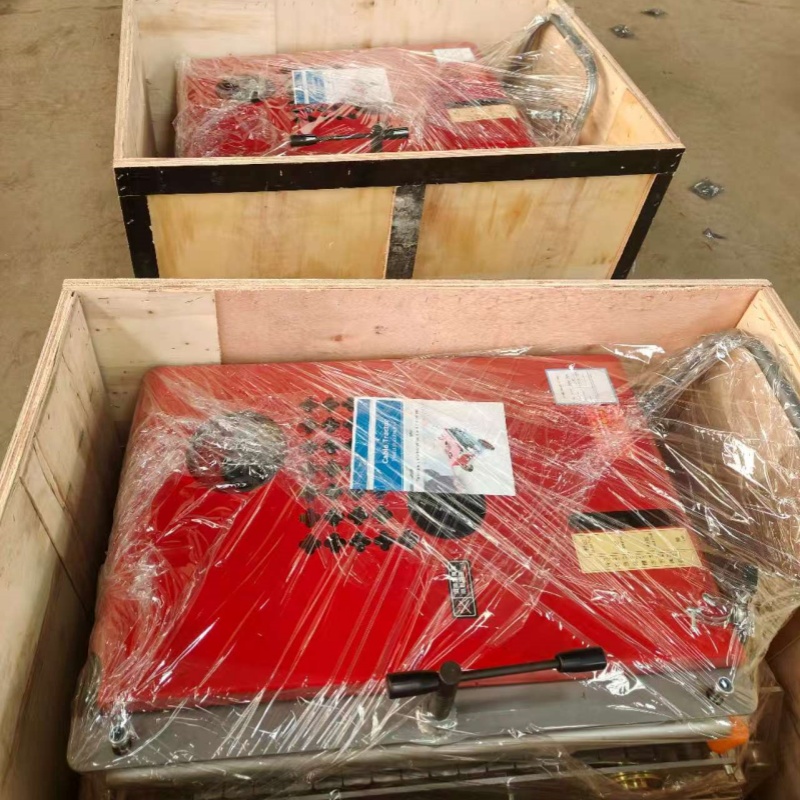
1. What Is a Fiber Optic Cable Tractor and Why Is It Essential for Modern Cable Construction?
1.1 Understanding Fiber Optic Cable Tractor Technology
A fiber optic cable tractor is a mechanical installation tool that uses a powered drive mechanism and a gripping system to move compatible fiber optic cables or cable ducts along an installation route.
Depending on the design, its main components may include:
Drive motor: Supplies the power needed to move the cable or duct.
Traction tracks or gripping rollers: Transfer the driving force to the cable or duct.
Tension control system: Helps operators regulate pulling force and avoid excessive loading.
Speed control: Allows adjustment of the installation speed to suit route conditions.
Control panel: Provides operating controls and, on advanced models, status information and safety alerts.
Frame and support structure: Keeps the equipment stable during operation.
The exact configuration varies by manufacturer. Buyers should confirm whether a machine is designed for direct cable feeding, duct propulsion, or a specific cable installation method rather than assuming that every tractor can handle all applications.
1.2 Why Contractors Are Moving Beyond Manual Cable Pulling
Manual cable pulling remains useful for short, accessible routes and delicate positioning work. However, it becomes less practical when projects involve long distances, repeated installations, heavy cable bundles, or demanding schedules.
A suitable cable tractor can offer several advantages.
More consistent installation speed: A powered drive reduces dependence on the physical strength and coordination of individual workers.
Reduced repetitive labor: Operators can focus on cable alignment, route monitoring, and safety instead of continuously supplying pulling force by hand.
Improved process control: Adjustable speed and appropriate tension-monitoring equipment help contractors manage changing installation conditions.
Better project planning: Mechanized pulling can make installation procedures more repeatable across multiple crews and job sites.
Importantly, a cable tractor does not automatically eliminate cable damage. Safe installation still depends on the cable manufacturer's specifications, suitable pulling attachments, correct bend radius, and appropriate operating procedures.
The Fiber Optic Association (FOA) recommends using automated pulling equipment with tension control when appropriate for long cable runs. Its installation guidance also emphasizes respecting maximum pulling tension and minimum bend radius requirements.
Source: The Fiber Optic Association, Installing Fiber Optic Cable.
2. Core Advantages Over Manual Pulling: Faster Installation and Lower Cable-Damage Risk
2.1 Can a Cable Tractor Make Installation 60% Faster?
A frequently used marketing benchmark is that mechanized cable installation can be up to 60% faster than manual pulling. However, this should be treated as a project-specific target, not a universal performance guarantee.
Actual productivity depends on route length, duct condition, cable type, the number of bends, setup time, operator experience, and the performance of the selected equipment.
For example, consider a hypothetical installation project:
Performance Metric Manual Method Tractor-Assisted Method
Productive installation rate 100 m/hour 160 m/hour
Cable length 800 m 800 m
Productive pulling time 8 hours 5 hours
Time saved — 3 hours
Productivity increase — 60%
These figures illustrate a calculation rather than verified performance data for a specific machine.
The productivity increase is calculated as:
Productivity increase = (New rate − Original rate) ÷ Original rate × 90%
In this example, (160 − 100) ÷ 100 × 90% = 60%.
Notice that a 60% increase in installation rate does not mean a 60% reduction in total project time. In this example, productive pulling time falls by 37.5%. Setup, equipment transport, inspections, and finishing work must also be included when measuring the overall project schedule.
For procurement teams, the best approach is to conduct a controlled field trial using the actual cable, route, and operating conditions expected on site.
2.2 Reducing the Risk of Fiber Kinking and Mechanical Damage
Fiber optic cables contain optical fibers and structural components that can be damaged by excessive tension, crushing, twisting, or tight bends.
A cable tractor with suitable traction and tension control can help operators maintain more consistent movement and reduce sudden changes in pulling force. Nevertheless, no cable tractor can guarantee zero kinking or zero fiber damage under all conditions.
To protect cable integrity, operators should:
Follow the cable manufacturer's maximum installation tension.
Maintain the specified minimum bend radius throughout the pull.
Use approved pulling eyes, grips, swivels, and other compatible attachments.
Avoid abrupt starts, sudden stops, and uncontrolled acceleration.
Ensure the tractor's gripping mechanism does not crush or deform the cable jacket.
Inspect and test the installed cable according to the project requirements.
The FOA's installation guidance commonly recommends a minimum bend radius of 20 times the cable diameter during pulling and 10 times the diameter after installation when the cable manufacturer's specifications do not state otherwise. Actual requirements can differ by cable construction.
For example, a cable with an outside diameter of 12 mm would have a reference bend radius of 240 mm during pulling under this general guideline.
Source: The Fiber Optic Association, The FOA Reference For Fiber Optics—Installing Fiber Optic Cable: Bend Radius.
2.3 Improving Labor Efficiency and Crew Coordination
Manual pulling often requires workers at several points along the route to feed, guide, pull, and monitor the cable.
Mechanized installation can reduce the amount of continuous manual force required. Depending on the route and equipment design, this may allow contractors to assign personnel more efficiently to cable alignment, communication, inspection, and safety monitoring.
However, labor savings should be calculated from actual crew requirements. Long-distance projects may still need multiple operators, intermediate pulling points, and personnel stationed at access chambers.
The goal is not simply to use fewer workers. It is to complete the installation with an appropriate crew, fewer avoidable delays, and better control over cable handling.
3. Top Features to Prioritize When Buying a Fiber Optic Cable Tractor in 2026
A well-designed tractor should match the installation task rather than merely offer the highest advertised power or pulling force.
3.1 Anti-Slip Rubber Tracks or Cable-Compatible Gripping Components
Traction is one of the most important factors affecting installation performance.
Rubber tracks can provide useful friction and help distribute contact pressure across a compatible cable or duct. Other designs use shaped rollers or specialized gripping assemblies.
When evaluating a traction system, check:
Contact material and resistance to wear.
Compatibility with the cable or duct diameter.
Adjustment range for different cable sizes.
Grip consistency under expected operating conditions.
Whether contact pressure can be controlled.
Ease of cleaning and replacement.
Excessive grip pressure may deform a cable jacket, while insufficient grip can cause slipping and inconsistent feeding. The best system balances traction with protection.
Ask suppliers to demonstrate the equipment with a cable or duct representative of your actual project.
3.2 Adjustable Tension Control
Tension control is particularly important for fiber optic installations because excessive pulling force can damage cable components.
Depending on the model, tension management may involve adjustable drive force, a tension sensor, a load display, an automatic stop function, or a compatible external measuring device.
Before purchasing, confirm whether the equipment provides actual tension measurement or only an adjustable motor setting. These functions are not equivalent.
A motor control setting alone does not necessarily tell the operator the pulling force being applied to the cable.
For professional applications, prioritize:
A clearly defined operating-force range.
Accurate and documented measurement, where provided.
Adjustable force limits.
Overload protection.
Emergency-stop functionality.
Compatibility with external tension-monitoring equipment.
Calibration and maintenance support.
The selected operating limit must remain within the cable manufacturer's approved installation tension, with allowance for route conditions and applicable project requirements.
3.3 Variable Speed and Smooth Starting
A tractor should allow operators to adjust cable movement to suit different installation conditions.
Low-speed operation is useful near duct entrances, bends, joints, and other locations where close monitoring is required. Higher speeds may be appropriate on straight, unobstructed sections when the cable and equipment specifications permit them.
Look for:
Variable-speed operation.
Smooth acceleration and deceleration.
Stable movement at low speed.
Predictable stopping behavior.
A clear emergency-stop procedure.
A machine with high maximum speed but poor low-speed control may be less suitable for complex fiber optic work than a slower model with more precise adjustment.
3.4 Simple Controls and One-Button Operation
An intuitive control interface can reduce training time and help operators respond consistently to changing conditions.
Some tractors may offer simplified start-and-stop controls, preset operating modes, or remote operation. These features can be useful, but one-button operation should never replace necessary inspections or safety checks.
Before selecting a model, evaluate whether operators can easily:
Start and stop the machine.
Adjust speed and pulling force.
Recognize overload or fault warnings.
Activate the emergency stop.
Confirm that the cable is correctly positioned.
Control simplicity is most valuable when it reduces operator errors without hiding important operating information.
3.5 Durable Construction and Easy Maintenance
Cable construction tools often operate in dusty, damp, or uneven outdoor environments.
A suitable machine should have a robust frame, accessible service components, replaceable wear parts, and protection appropriate for the intended working environment.
Check the following:
Frame material and corrosion protection.
Motor duty rating and cooling requirements.
Electrical protection and enclosure rating.
Availability of replacement tracks, rollers, and drive components.
Routine maintenance intervals.
Warranty coverage and technical support.
Spare-parts lead times.
Do not assume that a machine is suitable for rain, mud, or immersion simply because it is described as heavy-duty. Request the manufacturer's documented environmental ratings.
4. How to Match Tractor Specifications to Your Project Scope
The right cable tractor depends on installation distance, cable construction, route complexity, and required daily output.
4.1 Small FTTH and Residential Fiber Projects
FTTH projects commonly involve distribution ducts, residential access routes, short underground sections, and installations around existing utilities.
For these applications, buyers may prioritize portability, compact dimensions, fast setup, and compatibility with smaller cable or duct sizes.
Recommended selection priorities include:
Compact construction for restricted working areas.
Compatibility with the actual FTTH cable or duct.
Low-speed control for careful feeding.
Manageable equipment weight.
Simple operator controls.
Straightforward transport between job sites.
A large industrial tractor may be unnecessarily expensive for contractors whose work consists mainly of short residential routes.
For very short indoor runs, manual pulling or a smaller cable-feeding tool may remain the more economical option.
4.2 Medium-Scale Distribution Networks
Distribution network projects may involve longer duct sections, multiple access chambers, and a mixture of straight runs and bends.
At this level, consider a tractor that offers a wider operating range, reliable traction, adjustable speed, and compatibility with tension-monitoring equipment.
Other useful features include:
Replaceable gripping components.
Stable mounting arrangements.
Controls that support coordinated operation with the cable reel.
Practical transport and setup requirements.
Accessible maintenance points.
The main objective is to maintain consistent performance across different sections of the route without compromising cable safety.
4.3 Long-Distance Backbone and Outside-Plant Deployment
Long-distance backbone projects demand more detailed engineering.
Cable length alone does not determine the required tractor capacity. Route geometry, elevation changes, duct friction, lubrication, cable weight, cable construction, and intermediate access points can all influence pulling force.
For these projects, prioritize:
Documented force capacity and suitable operating margins.
Accurate tension measurement or compatible monitoring systems.
Controlled starting and stopping.
Integration with pulling ropes, approved grips, and swivels.
Support for intermediate pulling points where needed.
Reliable communication between operators.
Detailed installation and safety documentation.
For particularly long routes, multiple pulling stages or intermediate powered equipment may be preferable to attempting a single continuous pull.
The FOA recommends considering intermediate automated pulling equipment for very long outside-plant runs, particularly those exceeding approximately 4 km, depending on the installation conditions.
4.4 Quick Comparison: Which Tractor Category Fits Your Work?
Project Type Main Priority Features to Consider
Residential FTTH Portability and ease of use Compact frame, compatible grips, low-speed control
Distribution network Versatility and consistent operation Adjustable speed, replaceable components, tension monitoring
Backbone deployment Controlled pulling force and reliability Documented capacity, monitoring, overload protection
Repeated high-volume installation Productivity and serviceability Duty rating, fast setup, maintainability, field support
These categories are starting points rather than fixed equipment specifications. Always confirm the actual cable diameter, duct dimensions, and required pulling force before ordering.
5. Common Mistakes to Avoid When Selecting Your First Cable Construction Tractor
Mistake 1: Choosing Based on Maximum Pulling Force Alone
A higher force rating does not automatically make a machine better.
The tractor must deliver suitable force without exceeding the allowable tension of the cable being installed. Excessive capacity without appropriate control can create additional risk.
Better approach: Compare usable operating ranges, tension-control features, and compatibility with the project cable.
Mistake 2: Ignoring Cable and Duct Compatibility
Some machines are designed to propel ducts, while others are intended to feed or pull particular cable constructions.
A tractor that works well with one cable diameter or jacket material may not grip another safely.
Better approach: Supply the manufacturer with cable specifications, duct dimensions, jacket material, and installation details before purchasing.
Mistake 3: Treating Adjustable Motor Power as Tension Measurement
Motor speed or power settings do not necessarily provide a direct measurement of the force acting on the cable.
Better approach: Confirm whether the equipment has a calibrated tension sensor, a force display, an automatic limiting system, or compatibility with an external tension meter.
Mistake 4: Overlooking Bend Radius and Route Conditions
A tractor cannot compensate for undersized rollers, sharp duct entrances, obstructed conduits, or unsuitable routing.
Better approach: Inspect the route, check bend-radius requirements, identify high-friction sections, and plan intermediate pulling points where necessary.
Mistake 5: Ignoring Maintenance and After-Sales Support
A low purchase price can become expensive if replacement tracks, electrical components, or specialist repairs are difficult to obtain.
Better approach: Compare warranty terms, service availability, spare-parts pricing, and expected maintenance intervals.
Mistake 6: Accepting Unverified Productivity Claims
Claims such as “60% faster installation” may be achievable in particular applications, but they should not be treated as guaranteed results.
Better approach: Request documented test conditions or arrange a field demonstration using a representative cable and route.
Mistake 7: Underestimating Training and Safety Requirements
Mechanized pulling introduces moving parts and potentially hazardous pulling forces.
Better approach: Require operator training, documented procedures, appropriate guarding, emergency-stop access, and a clear division of responsibilities among the crew.
6. Real-World ROI Calculation: Can a Cable Tractor Reduce Labor Costs by 70%?
A potential reduction of 70% in labor cost is an aggressive target that should not be assumed for every project.
Actual savings depend on the number of workers required before and after mechanization, hourly labor rates, installation productivity, setup time, equipment cost, and maintenance expenses.
The following example shows how procurement teams can calculate ROI using transparent assumptions.
6.1 Example Project Assumptions
Suppose a contractor needs to install 10,000 meters of fiber optic cable.
Cost or Performance Item Manual Installation Tractor-Assisted Installation
Crew size 4 workers 2 workers
Productive installation rate 100 m/hour 160 m/hour
Labor cost per worker $30/hour $30/hour
Equipment rental or allocation $0/hour $20/hour
Productive installation hours 100 62.5
Direct labor cost $12,000 $3,750
Equipment cost $0 $1,250
Total modeled cost $12,000 $5,000
All figures are illustrative assumptions, not supplier quotations or independently verified field results. They exclude setup, transport, testing, maintenance outside the modeled equipment allocation, and any differences in rework.
6.2 Calculate the Potential Savings
The modeled savings are:
Savings = Manual cost − Mechanized cost
$12,000 − $5,000 = $7,000.
The modeled cost reduction is:
Cost reduction = ($7,000 ÷ $12,000) × 90% = 58.3%.
Under these assumptions, the tractor-assisted process reduces the combined modeled labor and equipment cost by approximately 58.3%.
The direct labor cost falls by 68.75%, but this is not the same as a 70% reduction in total project cost.
This distinction matters when evaluating marketing claims and comparing supplier proposals.
6.3 Estimate Equipment Payback
Suppose a contractor purchases a cable tractor for $15,000 and achieves $7,000 in net savings per comparable project after accounting for the relevant operating costs.
The simple payback period in projects is:
Payback = Purchase price ÷ Net savings per project
$15,000 ÷ $7,000 = 2.14 projects.
In practical terms, the equipment would recover its purchase price after approximately three comparable projects, assuming the modeled savings are actually achieved and there are no additional material costs.
For a more complete annual ROI assessment, include financing, depreciation, maintenance, operator training, transport, utilization rate, and any additional staffing required.
6.4 How to Validate ROI Before Purchasing
Use a pilot installation to record:
1.Total cable length installed.
2.Number of workers involved.
3.Productive pulling hours.
4.Setup, breakdown, and repositioning time.
5.Equipment rental or ownership costs.
6.Cable damage, testing failures, and rework.
7.Final cost per installed meter.
Compare the tractor-assisted process with a comparable manual installation under similar conditions.
This produces a more defensible business case than relying on headline productivity percentages alone.
7. Final Pre-Purchase Checklist for Procurement Teams
Before placing an order, use the following checklist to compare suppliers and confirm that the selected cable tractor meets the project's technical and commercial requirements.
Technical Compatibility
The tractor is designed for the intended cable-feeding or duct-propulsion application.
The supported cable or duct diameter matches the project requirements.
The gripping system is compatible with the cable jacket or duct material.
The operating-force range is suitable for the installation.
The required cable tension and bend-radius limits are documented.
Speed adjustment and starting behavior suit the planned route.
The machine can be used with the required pulling accessories.
Safety and Operation
Overload protection is documented where required.
Emergency-stop controls are accessible.
Actual tension monitoring is available or can be integrated when needed.
Operator instructions and safety documentation are supplied.
Maintenance and inspection procedures are clearly defined.
Environmental ratings suit the intended working conditions.
Commercial Evaluation
The quotation specifies the complete machine configuration.
Included accessories and optional equipment are clearly listed.
Warranty coverage and exclusions are understood.
Spare parts and replacement gripping components are available.
Delivery time and after-sales support are confirmed.
Training and commissioning costs are included in the budget.
ROI assumptions have been checked against realistic site conditions.
Supplier Verification
The supplier has provided technical datasheets.
Relevant operating demonstrations or references are available.
Claimed performance figures include test conditions.
Required inspection, testing, and documentation can be supplied.
The supplier has confirmed compatibility with the intended cable and route.
Conclusion: Invest in the Right Cable Construction Tool for Long-Term Value
A fiber optic cable tractor can help contractors improve installation consistency, reduce repetitive manual effort, and manage cable pulling operations more effectively.
The most suitable model is not necessarily the most powerful or the fastest. It is the machine that matches the cable construction, installation route, required pulling force, working environment, and expected project volume.
For small FTTH installations, portability and simple controls may offer the greatest value. For distribution networks, versatility and reliable tension management become increasingly important. For long-distance backbone projects, documented pulling capacity, accurate force monitoring, route planning, and integration with other installation equipment deserve priority.
When evaluating a Cable Construction Tool Fiber Optic Cable Tractor, compare the full cost of ownership rather than purchase price alone. Validate productivity claims through field testing, calculate labor savings using actual crew data, and confirm all technical requirements before ordering.
With the right equipment and installation procedures, contractors can build a more predictable, efficient, and cost-effective fiber optic cable installation process in 2026 and beyond.