
 NEWS List
Pull Cables Yourself or Hire a Pro? Can a Fiberglass Duct Rodder Actually Make DIY Viable?
Introduction
Whether you're installing network cables in a new home, upgrading a workshop, extending CCTV systems, or running fiber to a detached building, one question inevitably comes up:
Should you do it yourself or hire a professional cable installer?
The availability of affordable fiberglass duct rodders has made cable pulling easier than ever before. Tasks that once required specialized contractors can now be completed by homeowners, maintenance technicians, and small business operators with the right tools.
However, not every cable installation project is suitable for DIY execution.
A fiberglass duct rodder can dramatically simplify conduit work, but it cannot eliminate the technical challenges associated with complex cable installations.
This guide explains when DIY cable pulling makes sense, when professional assistance is essential, and how to make the right decision before spending time and money on the wrong approach.
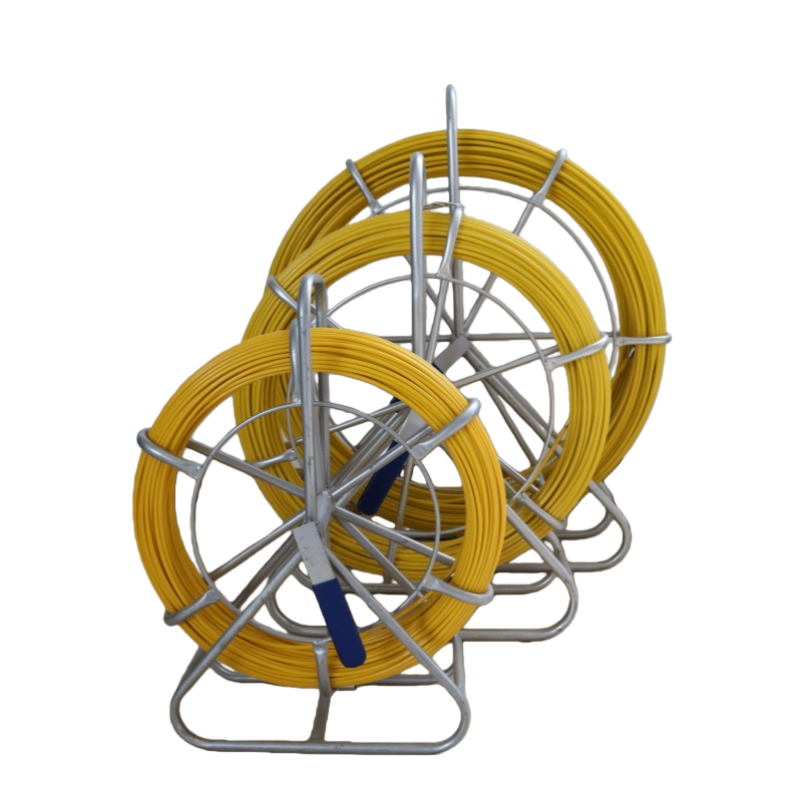
Why Fiberglass Duct Rodders Have Changed the DIY Landscape
Traditionally, cable pulling required:
Multiple workers
Specialized equipment
Significant installation experience
Modern FRP (Fiberglass Reinforced Plastic) duct rodders have lowered the barrier to entry.
They offer:
Lightweight handling
Non-conductive operation
Good flexibility
Long pushing distances
Relatively low purchase cost
For many small projects, a rodder can replace hours of trial-and-error cable fishing.
The key question is not whether a rodder works.
The real question is whether the project itself is suitable for DIY execution.
Scenario 1: When DIY Works Perfectly
Many cable installation projects are surprisingly straightforward.
If your project meets most of the following conditions, DIY installation is often practical.
Short Conduit Runs
Ideal DIY distance:
Under 30 meters (100 ft)
Preferably under 50 meters (165 ft)
Shorter runs generally mean:
Less friction
Easier troubleshooting
Lower pulling force
Few or No Bends
Straight conduit routes are highly DIY-friendly.
Examples include:
Garage network upgrades
Security camera installations
Garden lighting projects
Small workshop wiring
Home internet conduit runs
Every additional bend increases complexity.
The fewer bends, the easier the installation.
Existing Empty Conduit
DIY success rates increase dramatically when:
Conduit is already installed
No existing cable congestion exists
Pull strings are available
Empty conduits are usually straightforward for fiberglass rodders to navigate.
Low-Risk Cable Types
Good DIY candidates include:
Ethernet cable
CCTV cable
Speaker wire
Alarm cable
Low-voltage control wiring
These cable types are generally forgiving and inexpensive to replace if mistakes occur.
Scenario 2: When You Absolutely Need a Professional
Some projects exceed the capabilities of most DIY users regardless of tool quality.
In these situations, hiring a qualified contractor is usually the safer and more economical choice.
Long-Distance Conduit Systems
Warning threshold:
Over 100 meters (330 ft)
Long pulls introduce:
High friction
Increased cable tension
Greater risk of cable damage
Professional crews often use:
Pulling winches
Tension monitoring equipment
Specialized lubricants
These tools are rarely available to DIY users.
Multiple 90° Bends
Conduits containing several bends present major challenges.
Common problems include:
Rod sticking
Excessive friction
Cable twisting
Pull rope failure
An experienced installer can often identify and resolve these issues quickly.
Fiber Optic Installations
Fiber is far less forgiving than copper cable.
Mistakes can result in:
Excessive attenuation
Microbending damage
Connector contamination
Signal loss
Because fiber performance depends on proper handling, professional installation is strongly recommended for critical networks.
High-Voltage Environments
Projects involving:
Utility power systems
Commercial electrical infrastructure
Industrial facilities
should generally be performed by trained professionals.
Electrical hazards dramatically increase project risk.
Unknown Underground Conditions
If you do not know:
Conduit condition
Existing cable occupancy
Utility locations
professional assessment may prevent costly mistakes.
What Does a Basic DIY FRP Rodder Toolkit Cost?
Many homeowners assume cable-pulling equipment is expensive.
In reality, basic DIY setups are relatively affordable.
Typical Starter Toolkit
Includes:
Fiberglass duct rodder
Pulling eye attachment
Cable lubricant
Electrical tape
Work gloves
Flashlight or inspection light
Budget Range
Equipment Level Typical Budget
Basic DIY Kit $50–150
Advanced DIY Kit $150–300
Professional Contractor Setup $500–2,000+
For occasional residential use, a basic FRP rodder often provides sufficient capability.
The Hidden Costs of DIY Failure
Many project budgets only consider tool costs.
The real financial risks often emerge after mistakes occur.
Cable Damage
Improper pulling techniques can cause:
Jacket damage
Conductor damage
Fiber attenuation
Connector failure
Replacing damaged cable can cost far more than hiring a professional initially.
Project Delays
A project expected to take one afternoon can easily become:
Multiple weekends
Additional material purchases
Repeated troubleshooting sessions
Time has value.
Conduit Damage
Aggressive pulling can damage:
Conduit joints
Elbows
Existing infrastructure
Repairs may require excavation or wall access.
Incorrect Installation
Common DIY errors include:
Exceeding bend radius limits
Improper cable support
Overfilling conduits
Failure to follow local codes
These issues may not become apparent until months or years later.
DIY vs. Professional: A Simple Decision Framework
Before purchasing equipment or contacting a contractor, answer the following three questions.
Question 1
Can you clearly identify the conduit route from start to finish?
Yes
Proceed to Question 2.
No
Hire a professional.
Unknown conduit conditions create significant uncertainty.
Question 2
Is the conduit run shorter than 50 meters with only a few bends?
Yes
Proceed to Question 3.
No
Professional assistance is strongly recommended.
Question 3
Are you installing low-voltage cable rather than fiber optics or power cable?
Yes
DIY is often a practical option.
No
Consider professional installation.
The consequences of mistakes increase dramatically with fiber and power systems.
Quick Comparison: DIY vs Professional Installation
Factor DIY Professional
Initial Cost Lower Higher
Learning Curve High Minimal
Project Speed Variable Faster
Equipment Investment Required Included
Risk of Mistakes Higher Lower
Complex Conduits Difficult Routine
Fiber Installation Challenging Recommended
High-Voltage Work Not Recommended Required Expertise
Final Recommendation
A fiberglass duct rodder can absolutely make DIY cable pulling viable—but only for the right type of project.
DIY installation works best when:
✓ Conduit routes are short
✓ Bends are limited
✓ Cable types are low-voltage
✓ Access points are clearly known
✓ Risks are manageable
Professional installation becomes the smarter choice when:
✓ Distances are long
✓ Multiple bends exist
✓ Fiber optic cable is involved
✓ Electrical hazards are present
✓ Project downtime is costly
In many cases, the fiberglass rodder itself is not the limiting factor.
The complexity of the cable system is.
By evaluating your project honestly and using the three-question decision framework, you can quickly determine whether a DIY approach is practical—or whether hiring a professional will ultimately save time, money, and frustration.
Article Sources / References
本文内容参考电缆安装、住宅布线、通信工程及施工管理行业公开资料整理,主要来源包括:
1.The Fiber Optic Association (FOA) — 光纤安装与布线佳实践。
2.BICSI International — 结构化布线与通信基础设施设计规范。
3.National Electrical Contractors Association (NECA) — 电气施工及导管安装指导。
4.National Electrical Manufacturers Association (NEMA) — 电缆与导管系统技术标准。
5.Occupational Safety and Health Administration (OSHA) — 电气作业和施工现场安然要求。
6.International Electrotechnical Commission (IEC) — 电缆安装和机械性能相关标准。
7.各主流Fiberglass Duct Rodder、Fish Tape及Cable Pulling Equipment制造商的技术手册、用户指南及现场应用案例。