
 NEWS List
Industrial Cable Pulling Tool Safety Manual — 90% of Accidents Were Preventable
Introduction
Cable pulling operations are among the most common activities in electrical, telecommunications, utility, transportation, and industrial infrastructure projects.
Because fiberglass duct rodders, cable pullers, fish tapes, and conduit snakes are often perceived as simple hand tools, many workers underestimate the risks associated with their use.
In reality, cable installation accidents can result in:
Serious injuries
Electrical shock incidents
Equipment failures
Project delays
Property damage
Costly legal liabilities
Industry investigations consistently show that most cable-pulling accidents are not caused by equipment defects but by procedural errors, inadequate planning, poor communication, or improper tool selection.
The encouraging news is that the majority of these incidents are preventable.
This safety manual outlines the essential protective measures, warning signs, team communication procedures, and lessons learned from real-world accident scenarios to help crews work more safely and efficiently.
Why Cable Pulling Safety Matters
Cable installation projects often involve:
Confined spaces
Underground utilities
Energized systems
Long pulling distances
Heavy cable loads
Multi-person work teams
These conditions create a combination of mechanical, electrical, and ergonomic hazards.
Even a relatively small mistake can produce significant consequences.
A safe operation begins long before the cable enters the conduit.
Required PPE Checklist
Personal Protective Equipment (PPE) serves as the first layer of defense against workplace injuries.
Before beginning any cable-pulling operation, all crew members should verify that appropriate PPE is available and properly worn.
Essential PPE for Cable Pulling Operations
Safety Helmet
Protects against:
Falling tools
Overhead hazards
Construction site impacts
Safety Glasses or Goggles
Protects against:
Flying debris
Broken connector fragments
Dust and particles
Cut-Resistant Work Gloves
Protects hands from:
Cable strands
Abrasion
Sharp conduit edges
Safety Footwear
Recommended features:
Slip-resistant soles
Impact protection
Electrical hazard rating where applicable
High-Visibility Clothing
Particularly important in:
Roadway projects
Utility corridors
Active construction sites
Hearing Protection
May be required when working near:
Pulling winches
Generators
Heavy equipment
PPE Pre-Job Checklist
Before work begins:
✓ Helmet inspected
✓ Eye protection clean and intact
✓ Gloves undamaged
✓ Footwear suitable
✓ High-visibility clothing worn
✓ Additional site-specific PPE available
No cable installation task should begin until PPE requirements are satisfied.
Warning Signs That Pull Force Has Exceeded Safe Limits
One of the most common causes of equipment failure and cable damage is excessive pulling force.
Unfortunately, installers often recognize the problem only after damage has occurred.
Learning to identify warning signs early is critical.
Warning Sign #1: Sudden Increase in Resistance
If pulling effort increases unexpectedly:
Stop immediately.
Do not apply additional force.
Possible causes include:
Cable snagging
Conduit obstruction
Tight bends
Connector failure
Warning Sign #2: Rod Buckling
During pushing operations, visible buckling indicates:
Excessive force
Insufficient rod stiffness
Conduit blockage
Continuing to push may permanently damage the rod.
Warning Sign #3: Connector Deformation
Signs include:
Bent pulling eyes
Distorted swivels
Thread damage
These symptoms indicate loads approaching or exceeding design limits.
Warning Sign #4: Jerking Movements
A cable should move smoothly.
Repeated jerking often indicates:
Excessive friction
Obstructions
Improper pulling technique
Shock loading dramatically increases the risk of equipment failure.
Golden Rule
If resistance suddenly changes:
Stop, investigate, and correct the cause before proceeding.
Never attempt to solve a pulling problem with brute force.
Mandatory Insulation Tools Near High-Voltage Cables
Electrical hazards represent one of the most serious risks during cable installation.
The danger is particularly high when conduit contents are unknown or existing energized systems are nearby.
Why Metallic Tools Create Additional Risk
Metal tools may:
Conduct electricity
Create fault paths
Increase shock exposure
This is especially dangerous during:
Utility maintenance
Retrofit projects
Underground infrastructure upgrades
Recommended Insulated Equipment
Whenever work occurs near energized systems, consider using:
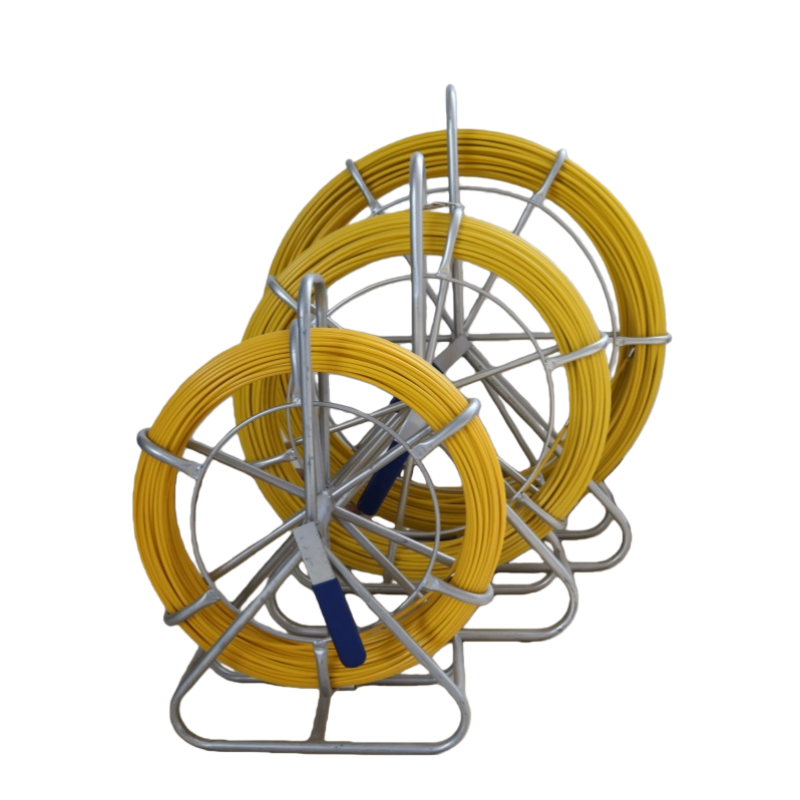
FRP Fiberglass Duct Rodders
Advantages:
Non-conductive
Lightweight
Corrosion resistant
Insulated Hand Tools
Certified insulated tools help reduce accidental electrical contact risks.
Voltage Detection Equipment
Before entering conduits:
Verify circuit status
Confirm isolation procedures
Identify unexpected voltage sources
Lockout/Tagout Compliance
Where applicable:
Follow site-specific isolation procedures.
Verify de-energization.
Apply lockout/tagout controls.
No tool can replace proper energy-control procedures.
Communication and Command Protocols for Multi-Person Crews
Many cable-pulling incidents occur because team members are not working from the same plan.
A successful operation requires clear communication.
Assign a Single Crew Leader
Every cable pull should have one designated person responsible for:
Command decisions
Work authorization
Emergency stop authority
Conflicting instructions create confusion and increase risk.
Establish Standard Commands
Examples include:
Command Meaning
Pull Begin pulling
Stop Immediate stop
Hold Maintain position
Feed Advance cable
Back Off Reverse movement
Every crew member should understand these commands before work begins.
Use Reliable Communication Methods
Depending on project conditions:
Voice communication
Two-way radios
Visual signals
Headset systems
may be appropriate.
Confirm Before Acting
Critical actions should be acknowledged.
Example:
Leader:
"Pull slowly."
Operator:
"Pulling slowly."
Confirmation reduces misunderstandings and improves coordination.
Accident Case Study: The Real Cost of Using the Wrong Tool
The following scenario reflects common accident patterns reported across utility and industrial sectors.
Project Overview
A maintenance crew was tasked with installing communication cable through an existing conduit system near energized electrical infrastructure.
The crew selected a steel rodder because it provided greater rigidity.
What Went Wrong
Several problems occurred simultaneously:
Existing conduit conditions were unknown.
Electrical isolation was not fully verified.
The metallic rod contacted energized components.
The resulting incident caused:
Equipment damage
Work stoppage
Emergency response activation
Fortunately, no fatalities occurred, but the project experienced substantial delays and financial losses.
Root Cause Analysis
Investigators identified several contributing factors:
✓ Inadequate hazard assessment
✓ Improper tool selection
✓ Poor communication
✓ Failure to follow established procedures
The incident was ultimately determined to be preventable.
Lessons Learned
The correct tool should be selected based on:
Environment
Electrical exposure
Conduit conditions
Project requirements
Tool choice is a safety decision—not merely a productivity decision.
Additional Best Practices for Safe Cable Pulling
Experienced contractors consistently follow several additional safety principles.
Conduct a Pre-Job Risk Assessment
Identify:
Electrical hazards
Access restrictions
Environmental risks
Emergency procedures
before work begins.
Inspect Equipment Before Every Use
Check:
Rod condition
Connectors
Pulling accessories
Reel integrity
Damaged equipment should be removed from service.
Maintain Proper Body Positioning
Avoid standing directly in line with:
Tensioned ropes
Pulling devices
Loaded connectors
Unexpected failures can release significant energy.
Keep Work Areas Organized
Good housekeeping reduces:
Slip hazards
Trip hazards
Equipment damage
A clean worksite is generally a safer worksite.
Safety Checklist Before Every Cable Pull
Before starting:
✓ PPE verified
✓ Equipment inspected
✓ Hazard assessment completed
✓ Communication plan established
✓ Pulling route confirmed
✓ Emergency stop procedures reviewed
✓ Crew leader assigned
✓ Insulation requirements evaluated
If any item is missing, postpone the operation until the issue is resolved.
Conclusion
Cable pulling may appear routine, but it involves a combination of mechanical forces, electrical hazards, and human factors that can quickly create dangerous situations.
Most incidents are not random events.
They are typically the result of:
Improper planning
Excessive force
Inadequate communication
Incorrect tool selection
Failure to follow safety procedures
By implementing proper PPE requirements, monitoring pulling loads, using insulated equipment where appropriate, and establishing clear communication protocols, contractors can dramatically reduce risk.
The most important lesson is simple:
Every cable pull should prioritize safety before speed.
Because in industrial cable installation, the cost of a preventable accident is always far greater than the time required to prevent it.
Article Sources / References
本文依据口碑职业安然、电力施工、通信工程及工业设备管理行业公开资料整理,主要参考来源如下:
1.Occupational Safety and Health Administration (OSHA) — 施工现场安然管理、PPE要求及电气安然规范。
2.National Electrical Safety Code (NESC) — 电力设施施工与运行安然标准。
3.National Fire Protection Association (NFPA) — NFPA 70E电气作业安然要求。
4.National Electrical Contractors Association (NECA) — 电缆安装和电气施工佳实践。
5.BICSI International — 通信网络施工与现场管理规范。
6.Institution of Occupational Safety and Health (IOSH) — 工业安然管理与风险控制指南。
7.International Labour Organization (ILO) — 建筑和基础设施施工安然研究资料。