
 NEWS List
2026 FRP Duct Rodder Market Watch: Why Are Fiberglass Rodders Still Growing?
Introduction
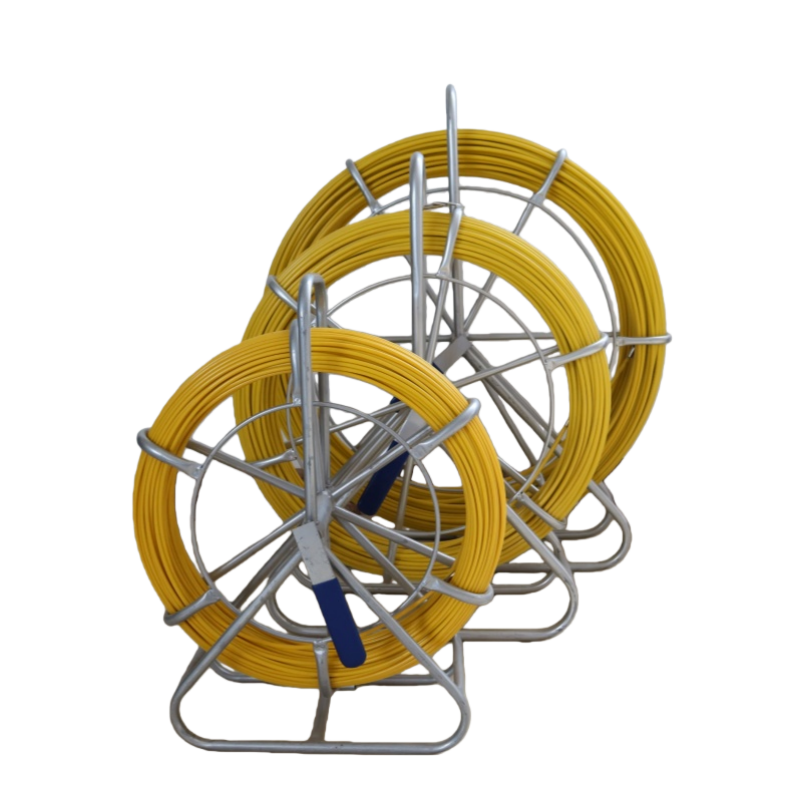
At first glance, the FRP duct rodder appears to be a simple tool.
A fiberglass rod mounted on a reel hardly seems like a product category capable of sustained global growth. Yet behind this seemingly straightforward cable installation tool lies a market benefiting from some of the world's largest infrastructure trends.
From underground power grids and smart cities to hyperscale data centers and nationwide fiber-optic deployments, the demand for reliable cable installation equipment continues to rise.
As governments invest heavily in infrastructure modernization and telecommunications operators expand next-generation networks, FRP duct rodders have become an increasingly essential part of the construction ecosystem.
So why is the market still growing in 2026?
The answer lies in five major industry forces reshaping global demand.
Global Infrastructure Investment Remains the Primary Growth Engine
Infrastructure spending remains one of the strongest long-term drivers for the cable installation equipment market.
Around the world, governments continue investing in:
Underground power transmission
Urban utility upgrades
Renewable energy projects
Transportation networks
Smart city infrastructure
Water and wastewater systems
Nearly all of these projects require cables to be installed through conduits, ducts, tunnels, or underground utility corridors.
Without cable pulling and conduit navigation tools, these installations become slower, more expensive, and more labor-intensive.
The Shift Toward Underground Infrastructure
Many countries are increasingly moving critical infrastructure underground to improve:
Reliability
Safety
Environmental resilience
Urban aesthetics
This trend directly increases demand for:
Duct rodders
Cable rollers
Pulling equipment
Conduit inspection tools
Every kilometer of newly installed underground conduit creates future demand for cable installation and maintenance equipment.
5G Expansion and Data Center Growth Are Fueling Fiber Deployment
The second major growth engine is fiber-optic infrastructure.
The Global Fiber Build-Out Continues
Telecommunications operators continue expanding:
FTTH networks
Metro fiber systems
Backbone fiber routes
5G transport networks
Although 5G radio deployment receives much of the attention, fiber remains the hidden backbone that connects modern communication systems.
Every new fiber route requires:
Duct preparation
Pull rope installation
Cable routing
Maintenance access
FRP rodders remain one of the most efficient tools for these tasks.
Data Centers Are Consuming More Fiber Than Ever
The rise of:
Artificial Intelligence
Cloud computing
Edge computing
High-performance networking
has created unprecedented demand for data center infrastructure.
Modern data centers contain thousands of fiber connections that require precise installation and maintenance.
Because fiberglass rodders are:
Non-conductive
Lightweight
Low-friction
they are particularly well suited for fiber-rich environments.
Europe and North America Continue Material Substitution Trends
One of the most important structural changes in the market is the ongoing replacement of traditional steel tools with FRP alternatives.
Why Buyers Are Switching
Historically, steel rodders dominated cable installation projects because of their rigidity and strength.
However, modern contractors increasingly prioritize:
Worker safety
Corrosion resistance
Lower equipment weight
Lifecycle cost reduction
These priorities favor fiberglass.
Regulatory and Safety Drivers
In Europe and North America, stricter safety standards encourage the use of non-conductive tools whenever practical.
FRP offers several advantages:
✓ Electrical insulation
✓ Corrosion resistance
✓ Lower transportation costs
✓ Easier handling
✓ Reduced maintenance
As a result, fiberglass is gradually replacing steel in many utility and telecommunications applications.
Sustainability Considerations
Fleet operators and contractors are increasingly evaluating equipment based on Total Cost of Ownership (TCO) rather than purchase price alone.
A fiberglass rodder may cost slightly more initially, but lower maintenance requirements and longer service life often result in lower lifecycle costs.
This economic advantage continues to accelerate material substitution.
China's Role in the Global FRP Duct Rodder Supply Chain
China has become one of the world's most important manufacturing hubs for cable installation equipment.
Manufacturing Advantages
Chinese manufacturers benefit from:
Mature fiberglass supply chains
Competitive labor costs
Large-scale production capacity
Export-oriented manufacturing ecosystems
These advantages enable Chinese suppliers to serve markets across:
North America
Europe
Southeast Asia
Middle East
Africa
Latin America
Increasing Product Quality
A decade ago, buyers often associated Chinese products primarily with low-cost competition.
Today, many manufacturers have upgraded:
Production equipment
Composite material technology
Quality control systems
International certifications
As a result, competition is increasingly shifting from price alone to a combination of:
Performance
Reliability
Delivery capability
Customization services
Competitive Landscape
The current market generally consists of:
Premium Brands
Competing on:
Advanced engineering
Brand reputation
Specialized applications
Mid-Tier Manufacturers
Competing on:
Value
Product variety
International distribution
OEM/ODM Suppliers
Competing on:
Custom branding
Flexible production
Cost efficiency
This diversity allows buyers to source products that match different budget and performance requirements.
The 2026–2029 Technology Roadmap: Lighter, Stronger, Smarter
The next stage of market development is expected to focus on technological innovation.
Trend 1: Lighter Composite Structures
Manufacturers continue optimizing:
Resin systems
Fiberglass formulations
Coating materials
The goal is to reduce weight without sacrificing strength.
Benefits include:
Easier handling
Lower shipping costs
Reduced worker fatigue
Trend 2: Higher Tensile Strength
Demand for longer conduit installations is increasing.
Future FRP rodders are expected to offer:
Improved tensile capacity
Better fatigue resistance
Greater durability
This will support large-scale utility and telecommunications projects.
Trend 3: Smarter Installation Tools
Digital technology is beginning to influence cable installation equipment.
Potential developments include:
Integrated distance counters
Rod tracking systems
Conduit inspection integration
Digital maintenance monitoring
While still emerging, these features may become more common in premium products over the next several years.
Trend 4: Enhanced Surface Technologies
Future coatings may focus on:
Lower friction
Greater abrasion resistance
Improved UV protection
Extended service life
These improvements could further reduce lifecycle costs for contractors and utility operators.
What Buyers Should Watch in 2026
For procurement teams and distributors, several purchasing criteria are becoming increasingly important.
Material Quality
Not all fiberglass formulations are equal.
Connector Reliability
Failure often occurs at joints rather than within the rod itself.
Corrosion Resistance
Particularly important for utility and industrial applications.
Customization Options
Many buyers now require:
Custom reel sizes
Branded products
Specialized connectors
Long-Term Value
Lifecycle cost is increasingly replacing purchase price as the primary evaluation metric.
Conclusion
The continued growth of the FRP duct rodder market in 2026 is not driven by the tool itself—it is driven by the massive infrastructure projects taking place around the world.
As investments in:
Underground utilities
Fiber-optic networks
5G infrastructure
Smart cities
Data centers
continue to expand, demand for safe, lightweight, corrosion-resistant cable installation tools remains strong.
At the same time, ongoing material substitution from steel to fiberglass is reshaping procurement strategies in Europe, North America, and other mature markets.
Looking ahead to 2029, the industry's direction is clear:
Lighter. Stronger. Smarter.
Manufacturers that successfully combine advanced composite materials, improved durability, and intelligent features will be best positioned to capture the next phase of global market growth.
Article Sources / References
本文基于公共基础设施建设、光纤通信、复合材料及电力工程行业公开资料整理,主要参考来源如下:
1.International Telecommunication Union (ITU) — 公共宽带、光纤网络与数字基础设施发展报告。
2.Fiber Broadband Association (FBA) — FTTH与光纤宽带建设趋势研究。
3.International Energy Agency (IEA) — 电网升级、能源基础设施投资数据。
4.World Bank Infrastructure Data — 公共基础设施投资与城市化发展资料。
5.American Composites Manufacturers Association (ACMA) — FRP复合材料市场及技术发展趋势。
6.BICSI International — 数据中心、通信网络及综合布线行业标准。
7.Uptime Institute — 数据中心建设与运营趋势研究。
8.International Trade Centre (ITC) Trade Map — 口碑贸易与出口统计数据。
9.UN Comtrade Database — 公共商品贸易流向与出口分析。