
 NEWS List
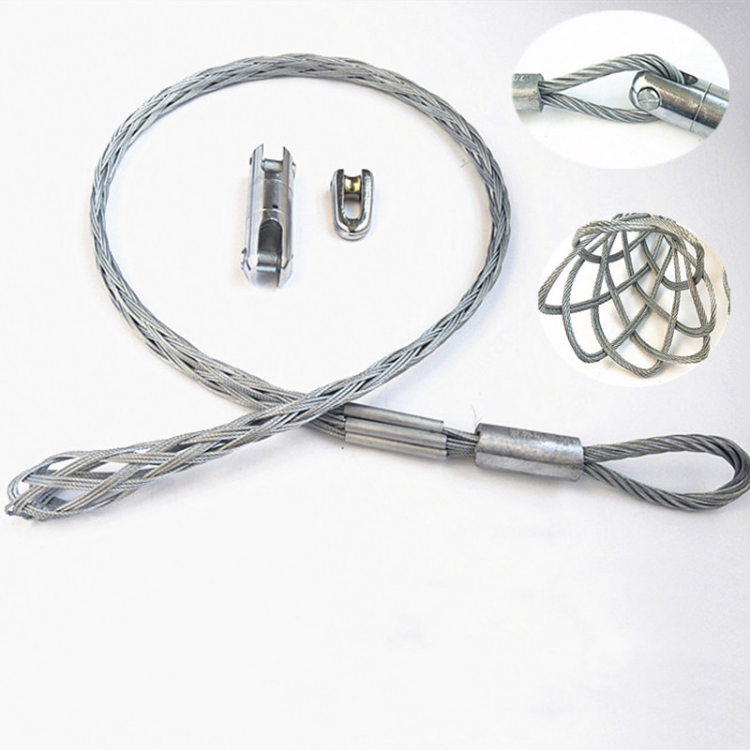
How to Choose the Right Wire Rope Mesh Cable Sock
I. Overview of Different Cable Traction Requirements
Power vs. Communication
Power cables and communication cables have distinct characteristics and traction requirements. Power cables are typically thicker and heavier, designed to transmit high - voltage electrical energy over long distances. They require cable pulling socks that can withstand significant pulling forces to ensure safe and efficient installation. In contrast, communication cables, such as fiber - optic or coaxial cables, are relatively thinner and lighter. Their traction needs focus more on gentle handling to prevent damage to the delicate internal components, which could affect signal transmission quality.
Light - Duty vs. Heavy - Duty
The load - bearing capacity required for cable pulling also varies depending on the application. Light - duty cable pulling tasks involve cables with relatively low weight and pulling forces. For example, in some small - scale communication network installations within a building, the cables may not require extremely high - strength pulling socks. On the other hand, heavy - duty applications, like the installation of large - diameter power cables for industrial plants or long - distance power transmission lines, demand cable pulling socks with high tensile strength to handle the substantial loads without failure.
II. Key Selection Factors
Cable Diameter Matching
One of the most crucial factors in selecting a wire rope mesh cable sock is ensuring a proper match with the cable diameter. A cable sock that is too large may not provide sufficient grip on the cable, leading to slippage during the pulling process. This can cause delays in the installation and potentially damage the cable. Conversely, a cable sock that is too small may be difficult to fit over the cable and could also cause compression damage to the cable's outer layer. Therefore, it is essential to accurately measure the cable diameter and choose a cable sock with an appropriate inner diameter range.
Tensile Strength Rating
The tensile strength rating of the cable sock indicates its ability to withstand pulling forces without breaking. Different applications require different tensile strength levels. For light - duty tasks, a cable sock with a lower tensile strength may be sufficient. However, for heavy - duty applications, such as pulling large power cables through long conduits or over long distances, a high - tensile - strength cable sock is necessary. It is important to calculate the expected pulling force based on factors like cable weight, length, and the friction in the pulling path and select a cable sock with a tensile strength that exceeds this calculated force to ensure safety and reliability.
Operating Environment (Underground / Outdoor / Industrial)
The operating environment has a significant impact on the performance and durability of the wire rope mesh cable sock. In underground applications, the cable sock may be exposed to moisture, soil chemicals, and mechanical abrasion from rocks and debris. Therefore, it needs to have good corrosion resistance and abrasion resistance. Outdoor environments expose the cable sock to sunlight, rain, wind, and temperature fluctuations. UV radiation from the sun can degrade the material of the cable sock over time, so choosing a cable sock with UV - resistant properties is important. In industrial settings, the cable sock may come into contact with various chemicals, oils, and high - temperature environments, requiring it to have excellent chemical resistance and heat resistance.
III. Comparison of Common Wire Rope Mesh Cable Sock Types
Standard Type
The standard wire rope mesh cable sock is suitable for general - purpose cable pulling applications. It offers a balanced combination of strength, flexibility, and cost - effectiveness. It can handle moderate pulling forces and is suitable for a wide range of cable diameters. This type of cable sock is often used in small - to medium - scale communication and power cable installations where the environmental conditions are not extremely harsh.
Heavy - Duty Type
The heavy - duty wire rope mesh cable sock is designed for demanding applications that involve high pulling forces and large - diameter cables. It is constructed with thicker wire ropes and a more robust mesh structure, providing significantly higher tensile strength compared to the standard type. This type of cable sock is ideal for industrial power plant installations, long - distance power transmission projects, and other heavy - load cable pulling tasks.
Stainless Steel Corrosion - Resistant Type
The stainless steel wire rope mesh cable sock is specifically engineered to withstand corrosive environments. Made from high - quality stainless steel, it has excellent resistance to moisture, chemicals, and oxidation. This type of cable sock is essential for applications in coastal areas, chemical plants, and other environments where corrosion is a major concern. It offers long - term durability and reliable performance, reducing the need for frequent replacements.
IV. Problems That May Arise from Incorrect Selection
Insufficient Tensile Strength
If a cable sock with insufficient tensile strength is selected for a heavy - duty application, it may break during the pulling process. This can cause the cable to fall, potentially damaging the cable and surrounding equipment. It can also lead to project delays as the broken cable sock needs to be replaced, and the cable may need to be re - pulled. In some cases, it could even pose safety risks to the construction personnel.
Cable Damage
An improperly selected cable sock, such as one that is too tight or has a rough inner surface, can cause damage to the cable. Compression damage to the outer layer of the cable can affect its insulation properties, leading to electrical faults in power cables or signal degradation in communication cables. Scratches or abrasions on the cable surface can also create weak points that may lead to future failures.
Construction Safety Hazards
Incorrect selection of cable pulling socks can create safety hazards during construction. For example, if a cable sock slips off the cable during pulling, it can cause the cable to whip around, potentially hitting workers or equipment. Additionally, a cable sock that fails under load can result in falling objects, which can cause serious injuries. Ensuring the proper selection of cable pulling socks is crucial for maintaining a safe construction environment.
V. Conclusion and Recommendations
The Importance of Professional Wire Rope Mesh Socks for Project Success
Selecting the right wire rope mesh cable sock is of utmost importance for the success of any cable installation project. A properly selected cable sock ensures safe and efficient cable pulling, reduces the risk of cable damage, and minimizes construction delays and safety hazards. It can also contribute to the long - term reliability of the cable system, reducing maintenance costs over time.
Recommendations
To ensure the correct selection of wire rope mesh cable socks, it is recommended to conduct a thorough assessment of the cable traction requirements, including cable type, diameter, expected pulling force, and operating environment. Consult with professional suppliers or engineers who have experience in cable pulling applications to get expert advice on the most suitable cable sock type for your specific project. Additionally, always follow the manufacturer's guidelines for installation and use to maximize the performance and lifespan of the cable pulling socks.
References
IEEE Power & Energy Society. IEEE Guide for Installation of Power Cables. IEEE Standards Association, New York.
International Electrotechnical Commission (IEC). IEC 60287: Electric Cables – Calculation of the Current Rating. IEC, Geneva.
International Organization for Standardization. ISO 4309: Cranes — Wire Ropes — Care, Maintenance, Installation, Examination and Discard. ISO, Geneva.
Prysmian Group. Cable Installation Manual and Pulling Tension Guidelines. Prysmian Technical Documentation.
Nexans. Guidelines for Cable Pulling and Installation. Nexans Cabling Solutions Technical Manual.
Southwire Company. Cable Pulling Fundamentals and Tension Calculations. Southwire Technical White Paper.
General Cable. Engineering Guide for Power and Communication Cable Installation. General Cable Corporation.
Eland Cables. Cable Cleats, Pulling Socks and Installation Accessories Technical Guide. Eland Cables Ltd.
Wire Rope Technical Board (WRTB). Wire Rope User’s Manual. American Iron and Steel Institute.
ASTM International. ASTM A1023 / A1023M – Standard Specification for Steel Wire Rope. ASTM International.