
 NEWS List
Power Maintenance and Construction Safety: Best Practices for Live-Line Operations and Infrastructure Inspection
Introduction
As electrical power networks continue to expand and modernize, utilities face increasing pressure to maintain reliable service while minimizing planned outages. Live-line maintenance has become an essential practice for reducing service interruptions, improving operational efficiency, and supporting the continuous delivery of electricity. However, working near energized equipment requires strict adherence to safety procedures, accurate distance measurement, and the use of certified insulating tools.
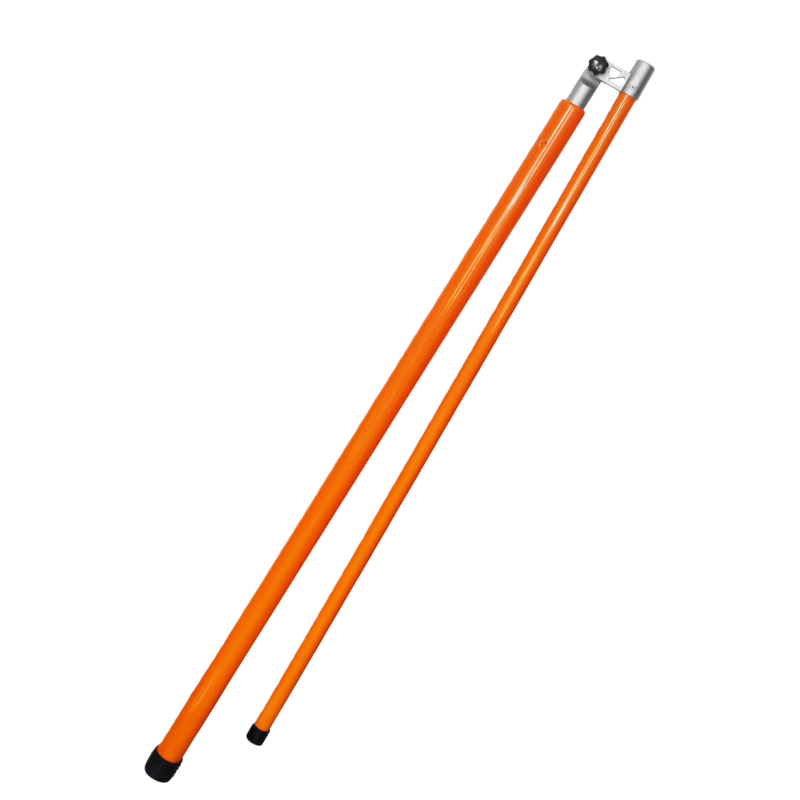
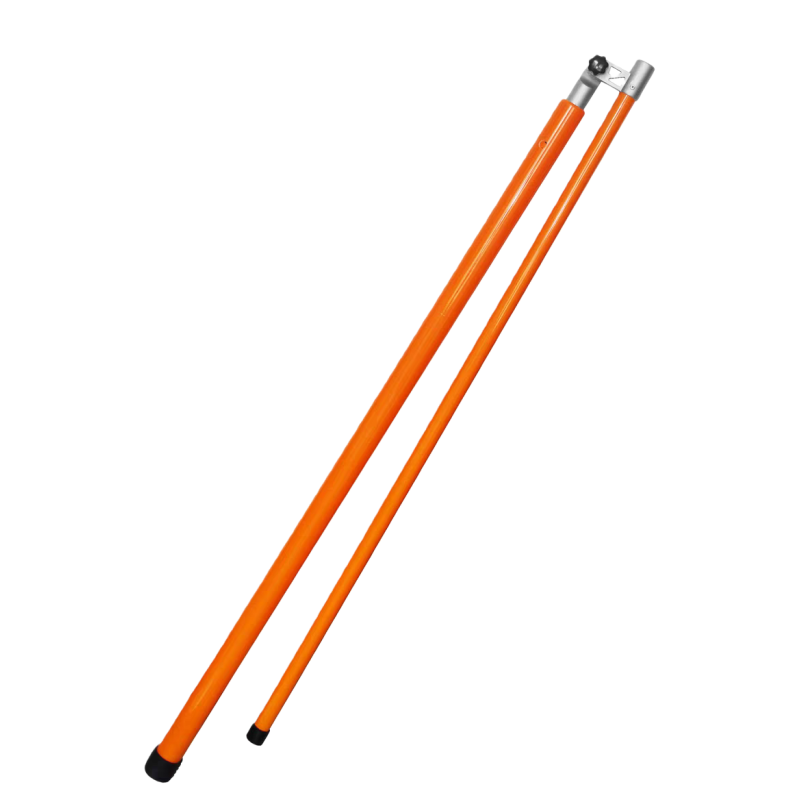
Insulated height measuring poles, manufactured from high-strength fiberglass reinforced polymer (FRP), have become indispensable equipment for power utilities, transmission contractors, railway electrification teams, and infrastructure maintenance organizations. These tools allow technicians to accurately measure conductor height, equipment clearance, and working distances while maintaining a safe separation from energized components.
This article explores the role of insulated height measuring poles in live-line maintenance, infrastructure inspection, and the development of standardized inspection procedures.
Live-Line Work Safety Practices
Why Live-Line Maintenance Is Increasing
Traditionally, maintenance work required de-energizing electrical equipment, resulting in planned outages and service disruptions. Today, many utilities perform maintenance while transmission and distribution systems remain energized, reducing downtime and improving grid reliability.
Successful live-line operations depend on three key factors:
Properly trained personnel
Certified insulated tools
Accurate measurement of electrical clearances
Insulated height measuring poles provide technicians with a practical means of verifying safe working distances before and during maintenance activities.
The Critical Role of Insulated Height Measuring Poles
Modern insulated height poles are designed using fiberglass reinforced polymer (FRP) and epoxy resin composites, combining excellent electrical insulation with high mechanical strength.
Typical applications include:
Measuring conductor height
Checking phase-to-phase clearance
Verifying phase-to-ground distance
Measuring equipment installation height
Confirming approach distances before maintenance
Supporting live-line inspection activities
Their lightweight telescopic construction allows operators to complete measurements efficiently while minimizing physical strain.
Accurate Safe Distance Measurement and Accident Prevention
Maintaining adequate clearance from energized equipment is one of the most effective ways to reduce electrical hazards.
Before beginning any maintenance task, technicians should verify:
Conductor-to-ground clearance
Phase-to-phase spacing
Distance between energized equipment and surrounding structures
Equipment installation height
Required minimum approach distance specified by applicable regulations
Accurate measurements help reduce the risk of:
Electrical flashover
Accidental contact with energized conductors
Arc flash incidents
Equipment damage
Operational errors during maintenance
While insulated measuring poles enhance workplace safety, they are only one component of a comprehensive electrical safety program that includes proper planning, personal protective equipment (PPE), and compliance with utility procedures.
Training Guide: Correct Usage for Electrical Line Workers
Proper training is essential to ensure both measurement accuracy and operator safety.
Step 1: Pre-Use Inspection
Before each use, technicians should:
Inspect the fiberglass surface for cracks or damage.
Verify that locking mechanisms operate smoothly.
Ensure measurement scales remain legible.
Confirm the tool is clean and dry.
Check that all accessories are securely attached.
Any damaged equipment should be removed from service until it has been inspected or replaced.
Step 2: Extend the Pole
Extend each telescopic section gradually, starting from the smallest section.
Avoid rapid extension or excessive force.
Step 3: Lock Each Section
Secure every telescopic joint using the designated locking mechanism.
Confirm that each section is fully engaged before taking measurements.
Step 4: Position and Measure
Maintain stable footing and position the pole vertically or at the required measurement angle.
Read the graduated scale only after the pole is correctly aligned and fully stabilized.
Step 5: Retract and Store
After completing the measurement:
Unlock sections in reverse order.
Retract the pole carefully.
Clean the surface.
Store the equipment in its protective carrying case or designated storage area.
Regular practice and periodic refresher training help reinforce safe operating habits and improve measurement consistency.
Infrastructure Inspection and Maintenance
Transmission Line Height and Clearance Inspection
Routine inspections help utilities identify changes caused by conductor aging, environmental conditions, or structural movement.
Typical inspection tasks include:
Transmission line sag measurement
Ground clearance verification
Pole-to-conductor spacing
Cross-over distance measurement
Vegetation clearance assessment
Substation equipment positioning
Accurate measurement data supports preventive maintenance and helps utilities identify potential issues before they affect system reliability.
Substation Equipment Inspection
Substations contain numerous energized components that require periodic inspection and verification.
Applications include:
Busbar height measurement
Disconnect switch positioning
Equipment installation verification
Transformer clearance inspection
Maintenance acceptance testing
Using insulated measuring poles enables technicians to collect dimensional information while maintaining appropriate separation from energized equipment.
Railway Electrification and Catenary Measurement
Railway electrification systems rely on precise geometric alignment to ensure safe and reliable train operation.
Insulated height measuring poles are commonly used to measure:
Contact wire height
Messenger wire position
Catenary system geometry
Electrical clearance
Tunnel overhead clearance
Platform safety distances
Routine inspections help railway operators maintain system performance and support preventive maintenance programs.
Standardized Inspection Workflows
Establishing consistent inspection procedures improves measurement quality, enhances traceability, and reduces human error.
A typical inspection workflow includes:
1.Review the inspection plan and applicable safety procedures.
2.Inspect the measuring pole before use.
3.Verify environmental conditions.
4.Measure all required dimensions using standardized methods.
5.Record measurements immediately.
6.Compare results with design specifications or previous inspection records.
7.Identify any deviations requiring corrective action.
8.Clean and store equipment after completing the inspection.
Standardized workflows help ensure consistent inspection results across different teams and work sites.
Data Logging and Inspection Record Templates
Accurate documentation is an essential part of infrastructure asset management.
A standardized inspection record typically includes:
Field Description
Inspection Date Date of inspection
Location Site or equipment identification
Asset ID Transmission line, pole, or equipment number
Voltage Level System operating voltage
Measurement Item Height, clearance, sag, spacing, etc.
Measured Value Recorded measurement
Reference Value Design or allowable value
Inspector Technician name or ID
Weather Conditions Temperature, wind, humidity, etc.
Observations Abnormal findings or recommendations
Digital inspection records can be integrated into maintenance management systems, enabling trend analysis, historical comparisons, and predictive maintenance planning.
Best Practices for Safe and Efficient Field Operations
Utilities and infrastructure operators can improve inspection quality by adopting the following practices:
Use insulated measuring poles certified to applicable international standards.
Conduct regular dielectric and mechanical inspections of all measuring equipment.
Provide periodic competency training for field personnel.
Standardize measurement procedures across all maintenance teams.
Maintain complete inspection records for traceability.
Replace damaged or worn equipment promptly.
Review inspection data regularly to identify maintenance trends and emerging risks.
Conclusion
Insulated height measuring poles are valuable tools for supporting safe live-line maintenance, accurate infrastructure inspection, and efficient asset management. By combining high-performance fiberglass composite materials with precision telescopic engineering, these tools help technicians measure conductor heights, equipment clearances, and railway electrification systems while maintaining appropriate safety distances.
When integrated into standardized inspection workflows, comprehensive training programs, and preventive maintenance strategies, insulated measuring poles contribute to improved operational safety, greater measurement consistency, and enhanced reliability across power transmission, substations, and railway electrification infrastructure.
References
The technical information presented in this article is based on internationally recognized standards and publicly available engineering references, including:
1.International Electrotechnical Commission (IEC). IEC 60855 Series – Live Working – Insulating Foam-Filled Tubes and Solid Rods.
2.ASTM International. ASTM F711 – Standard Specification for Fiberglass-Reinforced Plastic (FRP) Rod and Tube Used in Live Line Tools.
3.ASTM International. ASTM F1826 – Standard Specification for Live Line and High Voltage Maintenance Tools.
4.IEEE (Institute of Electrical and Electronics Engineers). Publications on live-line maintenance, electrical safety, and transmission line inspection.
5.Occupational Safety and Health Administration (OSHA). 29 CFR 1910 Subpart S – Electrical Safety-Related Work Practices.
6.ISO 9001:2015. Quality Management Systems – Requirements.
7.EPRI (Electric Power Research Institute). Technical guidance on live-line tools, transmission line inspection, and preventive maintenance.
8.UIC (International Union of Railways). Technical guidance for railway electrification systems and overhead contact line inspection.