
 NEWS List
Hydraulic vs Manual Cable Drum Stands – Which One is Better?
1. Introduction
Cable drum handling is a critical part of modern construction, power installation, and telecommunications projects. Whether laying underground cables or installing overhead lines, the efficiency and safety of handling cable drums directly impact project timelines and labor costs.
There are two primary types of cable drum stands widely used in the industry: manual and hydraulic. Choosing the right type is essential, as it affects not only operational efficiency but also worker safety and long-term cost performance. This article provides a comprehensive comparison to help you determine which option is best for your needs.
2. Manual Cable Drum Stands
Structure and Working Method
Manual cable drum stands are typically composed of a simple mechanical frame, support shafts, and adjustable brackets. The lifting and positioning of cable drums rely entirely on manual force or basic mechanical tools such as screw jacks.
Operators place the cable drum onto the stand and adjust its height manually. The drum rotates on a spindle as the cable is pulled.
Advantages
Low Initial Cost: More affordable compared to hydraulic systems
Simple Design: Easy to use and requires minimal training
Lightweight and Portable: Suitable for small-scale or temporary jobs
Limitations
Labor-Intensive: Requires significant physical effort
Limited Load Capacity: Not ideal for heavy cable drums
Lower Efficiency: Slower setup and operation
Higher Risk of Injury: Manual lifting increases safety concerns
3. Hydraulic Cable Drum Stands
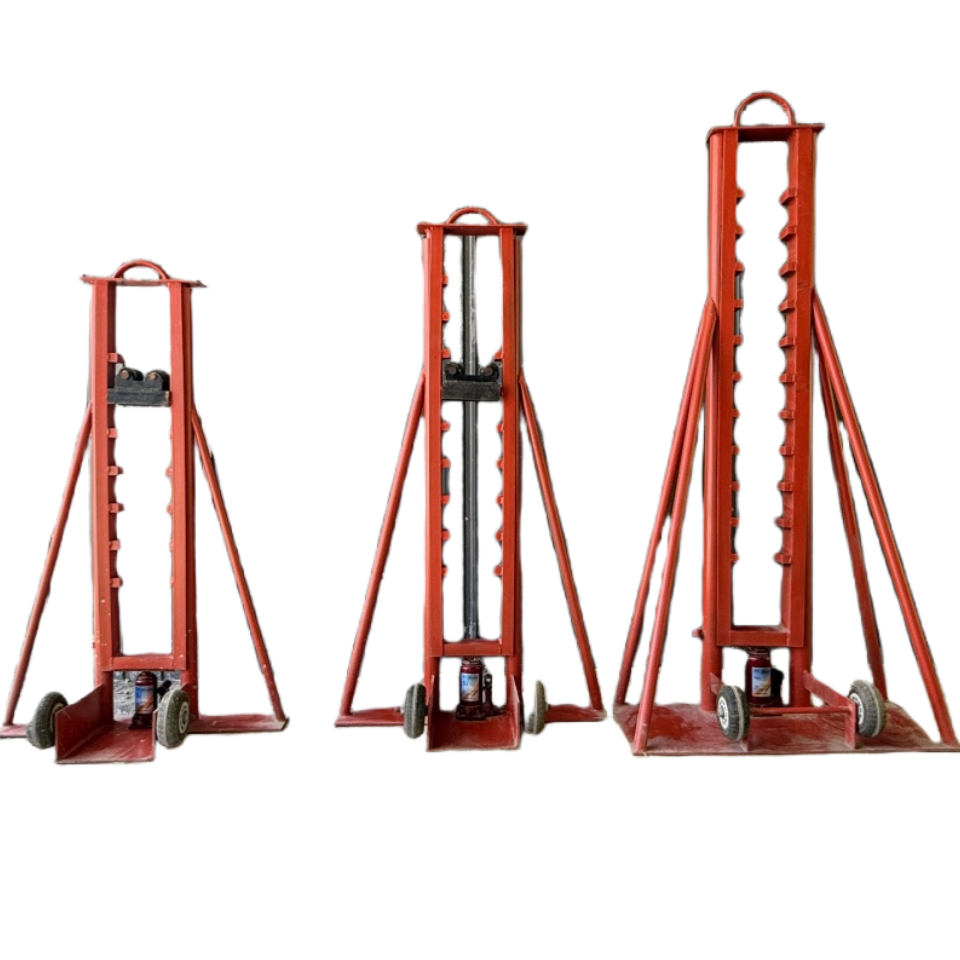
Working Principle
Hydraulic cable drum stands utilize a hydraulic lifting system powered by fluid pressure. This allows operators to raise or lower heavy cable drums with minimal physical effort. The system ensures smooth and controlled movement, improving both safety and precision.
Key Advantages Over Manual Types
High Load Capacity: Easily handles large and heavy cable reels
Effortless Operation: Reduces physical strain on workers
Precision Control: Smooth lifting and lowering enhance stability
Improved Productivity: Faster setup and cable deployment
Enhanced Safety: Minimizes risks associated with manual handling
4. Comparison Analysis
Efficiency
Hydraulic stands significantly outperform manual ones in terms of speed and ease of operation. Projects involving large cables benefit greatly from reduced setup time.
Safety
Hydraulic systems provide better control and stability, reducing workplace accidents. Manual stands, on the other hand, depend heavily on operator strength and skill.
Cost-Effectiveness
While manual stands have a lower upfront cost, hydraulic stands offer better long-term value due to increased productivity and reduced labor costs.
Maintenance
Manual Stands: Minimal maintenance, simple structure
Hydraulic Stands: Require periodic inspection of hydraulic components but remain durable and reliable
5. Selection Guide
Choosing between manual and hydraulic cable drum stands depends on several key factors:
Based on Project Scale
Small projects → Manual stands are sufficient
Large-scale projects → Hydraulic stands are more efficient
Based on Cable Weight
Lightweight cables → Manual stands can handle the load
Heavy-duty cables → Hydraulic stands are recommended
Based on Environment
Confined or temporary sites → Manual stands offer portability
Industrial, construction, or outdoor environments → Hydraulic stands provide stability and performance
6. Conclusion
While manual cable drum stands remain useful for small and low-budget projects, hydraulic cable drum stands have become the preferred choice in modern industry. Their superior efficiency, safety, and load-handling capabilities make them indispensable for large-scale and demanding applications.
Investing in hydraulic systems is not only a step toward improving productivity but also a commitment to safer and more professional operations.
Article Source
Global Construction Equipment Reports
Industry Blogs (e.g., Engineering.com)
Manufacturer Technical Documentation