
 NEWS List
Nylon vs Steel vs Fiberglass vs Polyester: The Ultimate Electrician’s Fish Tape Material Comparison & Buying Guide
Introduction
A fish tape is designed to guide wires through conduits, walls, ceilings, and cable trays where direct access is impossible. Choosing the right fish tape material can significantly improve:
Pulling efficiency
Worker safety
Cable protection
Tool lifespan
Project costs
Today’s market offers several fish tape materials, each suited for different environments and pulling challenges. The four most common are:
1.Nylon
2.Polyester
3.Fiberglass
4.Steel
This guide compares these materials in depth and helps you select the best option for your application.
Detailed Comparison of Four Key Fish Tape Materials
1. Nylon Fish Tape: Lightweight and Flexible
Nylon fish tape is a non-metallic, highly flexible option that excels in short-distance and residential applications.
Advantages
Extremely lightweight
Flexible enough to navigate multiple bends
Non-conductive for added electrical safety
Corrosion resistant
Easy for beginners to use
Limitations
Lower tensile strength than steel
Not suitable for heavy cable bundles
May stretch under excessive load
Best Applications
Home renovation
Pulling low-voltage cables
Data and communication wiring
Conduit runs under 30 meters
Ideal Users
Residential electricians
DIY installers
Telecom technicians
2. Polyester Fish Tape: Durable and Cost-Effective
Polyester fish tape combines flexibility with superior abrasion resistance, making it one of the best-value options on the market.
Advantages
Excellent wear resistance
Stronger than nylon
Low stretch under tension
Moisture and UV resistant
Long service life
Limitations
Less rigid than fiberglass
Not as strong as steel for extremely long pulls
Best Applications
Residential and commercial wiring
Outdoor conduit installations
General-purpose electrical work
Ideal Users
Professional electricians
Maintenance teams
Contractors seeking durability and value
Why Many Professionals Prefer Polyester
Polyester offers an outstanding balance of flexibility, durability, and price, making it one of the most versatile fish tape materials available.
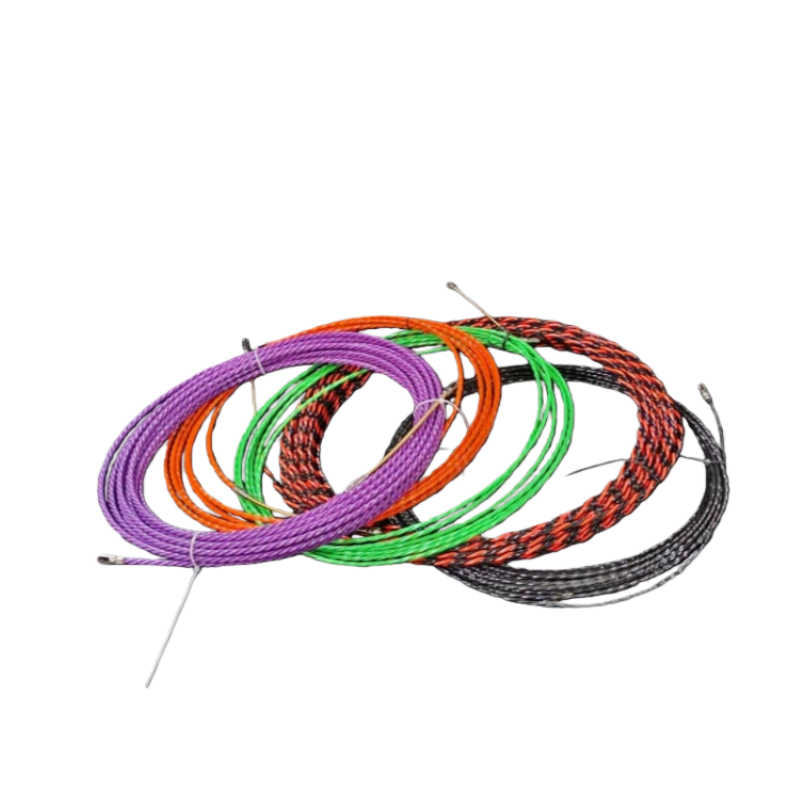
3. Fiberglass Fish Tape: Maximum Electrical Safety
Fiberglass fish tape is the preferred choice for environments where electrical insulation is critical.
Advantages
Completely non-conductive
High stiffness for pushing long distances
Excellent moisture resistance
Safe around energized systems
Resistant to corrosion and chemicals
Limitations
Can splinter if damaged
Typically more expensive
Requires careful handling
Best Applications
High-voltage installations
Utility and substation work
Hazardous environments
Long conduit runs with minimal bends
Ideal Users
Utility contractors
Industrial electricians
Safety-conscious professionals
4. Steel Fish Tape: Maximum Strength for Heavy-Duty Pulling
Steel remains the industry standard for the toughest pulling jobs.
Advantages
Highest tensile strength
Excellent push performance
Handles long conduit runs
Suitable for heavy cable bundles
Limitations
Electrically conductive
Susceptible to rust if not coated
Heavier than non-metallic alternatives
Best Applications
Industrial installations
Long-distance conduit pulling
Large-diameter conduits
Heavy power cables
Ideal Users
Industrial contractors
Utility crews
Experienced electricians
Material Comparison Table
Material Strength Flexibility Insulation Corrosion Resistance Best For
Nylon Medium Excellent Excellent Excellent Residential work
Polyester Medium-High Excellent Excellent Excellent General-purpose use
Fiberglass High Good Excellent Excellent High-voltage environments
Steel Very High Good None Moderate Heavy-duty pulling
Advantages of the “In Tube” Fish Tape Design
Modern fish tapes are often housed in a durable storage tube or case. This “in tube” design offers several important benefits.
Anti-Tangle Protection
The tape remains neatly coiled, reducing knots and twists.
Easy Storage and Transport
Compact cases fit conveniently in tool bags and service vehicles.
Extended Tool Life
The tube protects the tape from:
Dirt and debris
UV exposure
Mechanical damage
Moisture
Faster Deployment
Quick feed and rewind mechanisms save time on the job site.
Recommendations by Application Scenario
Home Renovation
Recommended Materials:
Nylon
Polyester
Why:
Safe and lightweight
Easy to maneuver through wall cavities
Cost-effective
Industrial Wiring
Recommended Materials:
Steel
Fiberglass
Why:
Superior strength
Better performance in long conduit runs
Suitable for demanding environments
Outdoor Projects
Recommended Materials:
Polyester
Fiberglass
Why:
Resistant to moisture, UV rays, and corrosion
High-Voltage Work
Recommended Material:
Fiberglass
Why:
Non-conductive and highly insulated
Heavy Cable Pulling
Recommended Material:
Steel
Why:
Highest tensile strength and push capability
Quick Buying Decision Table
If You Need… Choose…
Lowest cost for home use Nylon
Best value overall Polyester
Maximum electrical safety Fiberglass
Strongest pulling performance Steel
Outdoor durability Polyester
High-voltage insulation Fiberglass
Heavy industrial pulling Steel
Professional Buying Tips
When selecting fish tape, consider the following factors:
Conduit Length
Longer runs require stiffer and stronger materials.
Number of Bends
Flexible materials like nylon and polyester navigate corners more easily.
Electrical Safety
Use non-conductive fiberglass or nylon around energized circuits.
Cable Weight
Heavy power cables require steel.
Environment
Outdoor and corrosive conditions favor polyester or fiberglass.
Final Verdict: Which Fish Tape Material Is Best?
There is no single “best” fish tape material. The ideal choice depends on your specific application.
Choose Nylon for lightweight residential tasks.
Choose Polyester for the best combination of durability and value.
Choose Fiberglass when insulation and safety are critical.
Choose Steel for the most demanding heavy-duty pulls.
For most professional electricians, polyester fish tape provides the best overall balance of performance, longevity, and affordability.
Sources and References
This article is based on technical information and best practices from the following industry resources:
1.National Electrical Contractors Association
2.Occupational Safety and Health Administration
3.National Fire Protection Association
4.Institute of Electrical and Electronics Engineers
5.Product specifications and technical catalogs from manufacturers such as Klein Tools, Greenlee, and Southwire.