
 NEWS List
Core Applications and Advantages of Fiberglass Duct Rodder in Underground Cable Installation
Challenges in Underground Cable Installation and Tool Requirements
To overcome these challenges, installation tools must meet several key requirements: high strength, flexibility, durability, electrical insulation, and ease of operation. Among the available tools, the fiberglass duct rodder has emerged as an essential solution due to its balanced performance and adaptability in demanding underground environments.
Key Characteristics of Fiberglass Duct Rodder
High Strength and Lightweight Design
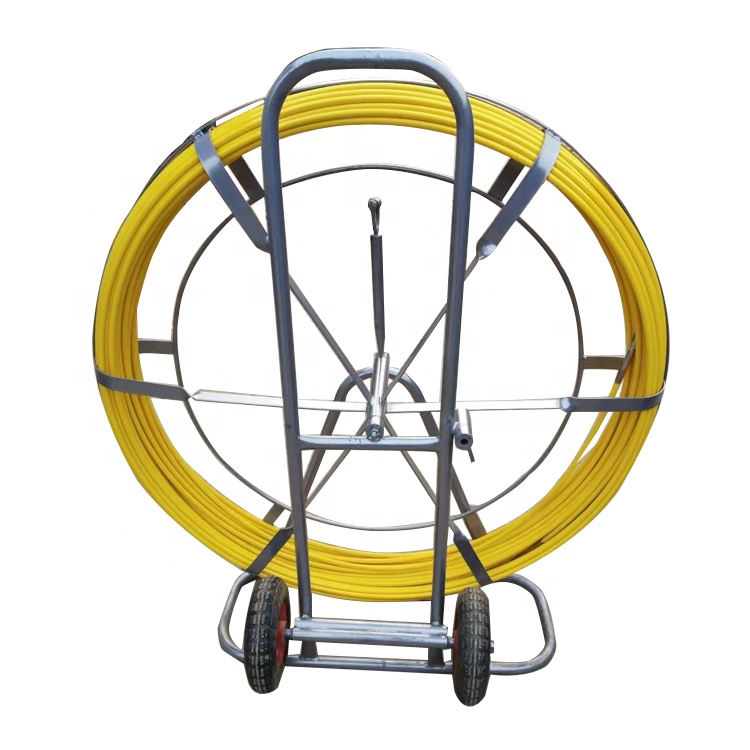
Fiberglass duct rodder is constructed from high-strength fiberglass reinforced plastic (FRP), offering excellent tensile strength while maintaining a lightweight structure. This allows operators to push or pull cables through long conduits with minimal physical effort.
Corrosion Resistance and Insulation Properties
Unlike metal tools, fiberglass rodder is highly resistant to corrosion, making it suitable for wet or chemically aggressive underground environments. Additionally, its non-conductive nature ensures electrical insulation, significantly reducing the risk of electric shock during operation.
Flexibility and Wear Resistance
The rodder combines rigidity with controlled flexibility, enabling it to navigate bends and curves in conduit systems without breaking. Its outer protective coating enhances wear resistance, prolonging service life even in rough inner duct surfaces.
Typical Application Scenarios in Underground Cable Installation
Urban Underground Pipeline Wiring
In densely populated urban areas, underground pipelines are often complex and congested. Fiberglass duct rodder helps technicians efficiently guide cables through pre-installed conduits without excavation, minimizing disruption to traffic and infrastructure.
Fiber-Optic Network Deployment
With the rapid expansion of high-speed internet and 5G networks, fiber-optic cable installation requires precision and reliability. Fiberglass duct rodder ensures smooth cable routing over long distances while protecting delicate fiber cables from damage.
Industrial and Building Electrical Installations
In industrial facilities and large buildings, concealed wiring systems are common. The rodder simplifies cable threading through conduits within walls, floors, and ceilings, improving installation efficiency and accuracy.
Advantages Over Traditional Tools
Improved Construction Efficiency
Compared with traditional steel wires or improvised pulling methods, fiberglass duct rodder allows faster cable routing with fewer interruptions. Its continuous length and smooth operation reduce setup time and labor intensity.
Enhanced Safety and Reliability
The insulating properties of fiberglass significantly enhance operational safety, especially in environments where electrical hazards exist. Its durability also reduces the likelihood of tool failure during installation.
Cost-Benefit Analysis
Although the initial cost of fiberglass duct rodder may be higher than basic tools, its long service life, reduced labor costs, and improved efficiency result in a lower overall cost of ownership. Fewer replacements and maintenance requirements further enhance its economic value.
Case Study: Practical Implementation in a City Fiber-Optic Network Project
In a metropolitan fiber-optic network expansion project, contractors faced challenges including narrow conduits, multiple bends, and long transmission distances. By adopting fiberglass duct rodders, the installation team successfully improved cable laying efficiency by over 30%.
The rodder’s flexibility enabled smooth navigation through complex duct systems, while its lightweight design reduced worker fatigue. Additionally, the insulating properties ensured safe operation in areas with existing electrical infrastructure. The project was completed ahead of schedule, demonstrating the practical benefits of this tool in real-world applications.
Conclusion: Future Technological Trends and Industry Application Prospects
As underground infrastructure continues to expand alongside smart cities, renewable energy systems, and advanced communication networks, the demand for efficient cable installation tools will grow. Fiberglass duct rodder is expected to evolve with innovations such as enhanced materials, digital tracking integration, and improved ergonomic designs.
Its versatility, durability, and safety advantages position it as a core tool in the future of underground cable installation, with broad application prospects across telecommunications, power engineering, and construction industries.
Source
This article is an original composition based on industry knowledge of underground cable installation tools, fiberglass reinforced materials, and practical applications in telecommunications and electrical engineering.