
 NEWS List
Technical Advantages and Operational Standards of Fiberglass Rodder in Fiber-Optic Network Construction
Introduction:Special Requirements for Fiber-Optic Network Construction
Fiber-optic network construction places extremely high demands on installation tools due to the delicate nature of optical fibers and the complexity of conduit environments. Unlike traditional power cables, fiber optic cables are highly sensitive to bending, tension, and external interference.
Therefore, installation tools must ensure smooth passage through pipelines, minimize mechanical stress, and protect signal integrity. Fiberglass rodders (FRP duct rods) have become a preferred solution due to their excellent mechanical properties, insulation performance, and adaptability to diverse construction environments.
Technical Characteristics Adaptability of Fiberglass Rodder
Low Friction Coefficient and Pipeline Passability
Fiberglass rodders are typically coated with high-density polyethylene (HDPE) or similar protective layers, resulting in a low friction coefficient. This allows the rod to move smoothly داخل pipelines with minimal resistance.
Advantages:
Reduced pushing force required during installation
Lower risk of cable damage due to friction
Improved efficiency in long-distance conduit operations
Signal Transmission Protection Mechanism
Fiberglass is a non-conductive material, which ensures that no electromagnetic interference (EMI) is introduced during cable installation. This is particularly important in environments with high electrical activity.
Key Benefits:
Prevents signal degradation caused by external interference
Maintains integrity of fiber optic transmission
Suitable for installation alongside power lines or in complex utility corridors
High-Temperature Resistance and Aging Resistance
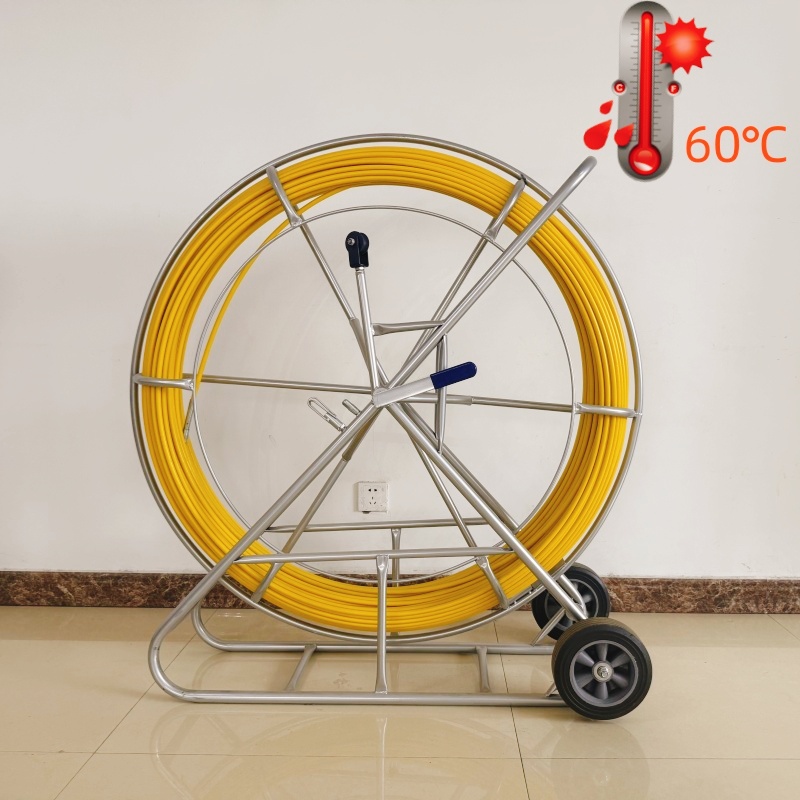
High-quality fiberglass rodders are engineered to withstand extreme environmental conditions, including high temperatures, humidity, and UV exposure.
Performance Characteristics:
Stable mechanical properties under temperature variations
Resistance to corrosion and chemical exposure
Long service life with minimal degradation
Operational Standards and Procedures for Fiber-Optic Installation
Pre-Treatment: Pipeline Cleaning and Inspection
Before inserting the rodder, the pipeline must be thoroughly cleaned and inspected:
Remove debris, water, or obstructions داخل the conduit
Use inspection tools (e.g., duct cameras) to assess internal conditions
Verify pipeline continuity and diameter compatibility
Proper pre-treatment ensures smooth rodder insertion and reduces the risk of blockage or cable damage.
Rodder Insertion and Cable Pulling Steps
1.Rodder Insertion:
Insert the fiberglass rodder slowly into the conduit, ensuring steady force to avoid bending or buckling.
2.Head Attachment:
Connect the pulling head or eyelet to the fiber optic cable securely.
3.Cable Pulling:
Pull the rodder back while guiding the cable into the conduit. Maintain consistent tension throughout the process.
4.Completion Check:
Inspect the installed cable for any visible damage or stress points.
Real-Time Monitoring and Troubleshooting
During installation, real-time monitoring is essential:
Observe resistance changes to detect obstructions
Stop immediately if abnormal tension occurs
Use lubrication or repositioning techniques when necessary
Timely troubleshooting prevents costly damage and project delays.
Safety Standards and Risk Prevention
Protective Equipment Requirements for Operators
Operators should be equipped with appropriate personal protective equipment (PPE):
Safety helmets
Insulated gloves
Protective eyewear
Anti-slip footwear
These measures reduce the risk of injury during construction.
Electrical Safety and Insulation Measures
Even though fiberglass rodders are non-conductive, safety protocols must still be followed:
Avoid direct contact with live electrical systems
Ensure proper grounding of nearby equipment
Use insulated tools in high-risk environments
Emergency Response Plans
A well-defined emergency response plan is critical:
Immediate shutdown procedures in case of accidents
First-aid readiness on-site
Clear communication channels for emergency coordination
Preparedness significantly enhances overall site safety.
Case Study: Practical Implementation in a National Communication Project
In a large-scale national fiber-optic network expansion project, fiberglass rodders were extensively used for underground conduit installation across urban and rural areas.
Implementation Highlights:
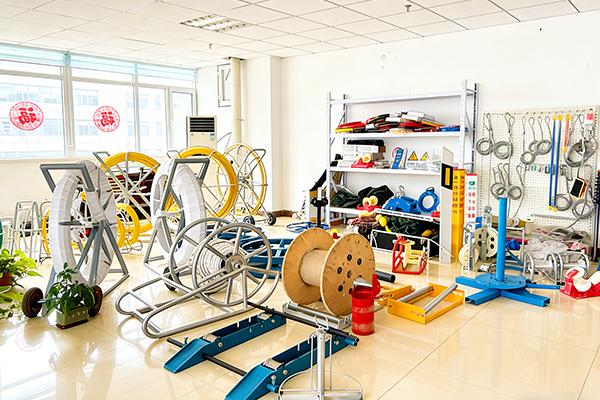
Adoption of wheeled FRP rodders for long-distance pipelines (over 100m)
Using portable poles in densely populated urban areas
Strict adherence to pipeline pre-cleaning and inspection protocols
Results:
Increased installation efficiency by over 30%
Significant reduction in cable damage incidents
Improved overall project quality and reliability
This case demonstrates the practical value of combining appropriate tools with standardized operational procedures.
Conclusion: Significance of Standardized Operations for Industry Quality Improvement
Fiberglass rodders play a crucial role in ensuring efficient and safe fiber-optic network construction. Their technical advantages—such as low friction, electrical insulation, and environmental durability—make them highly adaptable to complex installation scenarios.
However, the full benefits of these tools can only be realized through strict adherence to operational standards and safety protocols. Standardized procedures not only enhance construction efficiency but also ensure long-term network performance and reliability.
As the demand for high-speed communication infrastructure continues to grow, the integration of advanced tools and standardized operations will become a crucial factor in driving the improvement of industry quality.
Source
This article is compiled based on:
Fiber-optic network construction standards and best practices
Technical documentation of fiberglass (FRP) duct rodders from industry manufacturers
Field operation guidelines in telecommunications engineering projects
Practical experiences from large-scale national communication infrastructure implementations